What to pack for a sanatorium stay? Complete list for 7, 14 and 21 days
Author: Anna Bielińska · Published: · Updated:
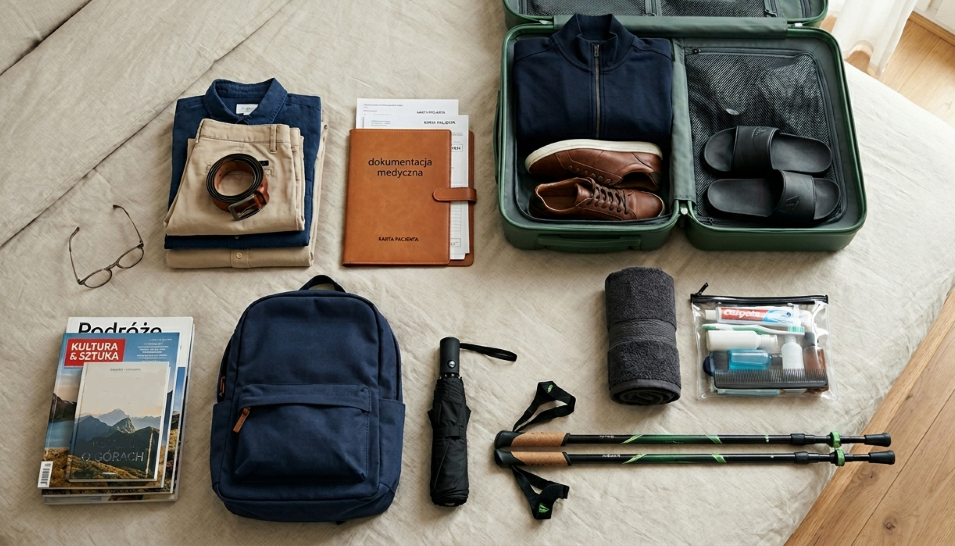
Packing for a sanatorium stay calls for a slightly different plan than an ordinary holiday. Besides clothes, you'll need documents, medicines you take regularly, and items needed for treatments. At the same time, there's no need to bring half your home: room amenities, pool requirements, and laundry options vary from facility to facility.
It's best to start with a short conversation with your chosen sanatorium, then adjust the list to the length of your stay, the season, the planned treatments, and your own needs. Below you'll find a practical checklist for 7, 14 and 21 days.
Before you leave, it's also worth checking how to recognise that your body needs to recover — especially if symptoms persist or limit your everyday functioning.
Quick list: the most important things to pack for a sanatorium
First, prepare the things that can't easily be replaced after you arrive:
Documents and health
- an identity document
- information about the treatment dates or booking confirmation
- medicines you take regularly and a clear dosage list
- medical records required by the facility
- medical equipment and accessories you use daily
Clothes and everyday comfort
- comfortable clothes and shoes for treatments
- underwear, socks, pyjamas and everyday clothes
- swimsuit, sandals and a swimming cap — if needed
- toiletries, glasses, hearing aid and chargers
- a small bag or backpack and a bag for wet items
1. Before you start packing: what to check with the facility
A quick call to reception or an email can help you pack less and save you stress once you arrive. Above all, ask about the following.
On Vitalnia, you'll find much of this information in the facility and package description, including in the sections on equipment, amenities, treatments, meals, and arrival information. If a particular piece of information isn't in the description, or concerns your individual situation, it's worth contacting the facility before packing.
| What to confirm? | Why does it matter? |
|---|---|
| Towels and a bathrobe | Check whether they're provided in the room, how many sets you'll get, and how towel changes are handled. |
| Pool and hydrotherapy | Find out whether you need a swimming cap, goggles, your own towel, or specific footwear. |
| Room amenities | Ask about a hairdryer, kettle, fridge, safe, and the number of available power sockets. |
| Laundry or drying room | Access to laundry facilities lets you pack fewer clothes for a 14- or 21-day stay. |
| Documents and medical assessment | The facility may require a health questionnaire, test results, or a consultation before certain treatments. |
| Diet and allergies | Report your dietary needs in advance and check whether accommodating them requires documents or an extra fee. |
| Arrival and fees | Confirm check-in times, parking, payment method, and the amount of the local health resort fee. |
| Personal electrical devices | Check the rules on kettles, extension leads, medical equipment, and other electrical devices. |
2. Documents: an NFZ-funded stay versus a privately funded stay
Keep your documents in your hand luggage, together with the medicines you take regularly. Don't put them only in luggage that will be carried separately.
NFZ-funded stay
Since 1 July 2023, a doctor generally issues an e-referral for health resort treatment, which is sent to the NFZ electronically. In a typical situation, you therefore don't need to submit or bring the original paper referral. However, if in an exceptional situation you receive a paper referral or additional instructions from the NFZ, follow those instructions.[1]
- an identity document with a PESEL number;
- information about the place and date of treatment — saved on your phone or printed for convenience;
- a paper referral or additional documents — only if indicated in the information from the NFZ or by the specific facility;
- current medical records related to the treatment, if the facility asks for them or if they may help staff understand your situation;
- documents confirming special entitlements, if you use them.
The health resort fee is a local fee. Statutory exemptions apply only to specific situations, and the municipality may have its own collection rules. If you're claiming an exemption, bring the document that confirms it. A pensioner or disability pensioner card alone does not automatically entitle you to an exemption — check the current rules with the facility or the municipality.[4]
Privately funded stay
An NFZ referral is not required to book a privately funded stay. However, specific treatments may require an assessment by a doctor or physiotherapist, a health questionnaire, or additional medical records.
- an identity document;
- booking confirmation, stay dates, the facility's address and a contact number;
- what your package includes and details of any additional services you've ordered;
- a health questionnaire, test results, or medical records requested by the facility;
- confirmation of dietary arrangements, an accompanying person's stay, or any other arrangements.
You can find more about how a privately funded stay differs from NFZ-funded health resort treatment in the guide "Privately funded sanatorium stay or NFZ-funded treatment?"
3. Medicines, medical records and medical equipment
Medicines and equipment you use daily take priority over extra clothes. Prepare them a few days before departure, so you have time to contact your clinic or pharmacy.
- enough medicine for the whole stay and the journey; if possible, include a small reserve for unexpected delays;
- medicines in their original packaging and a clear list of names, doses and the times you take them;
- information about allergies, sensitivities and any significant adverse reactions you've experienced;
- recent discharge summaries, test results, or recommendations, if the facility requires them or they relate to planned treatments;
- glasses, hearing aid and batteries, a blood glucose meter with test strips, a CPAP device, orthopaedic braces, a walking stick, or other aids you use regularly;
- chargers, power adapters and spare parts needed to run your medical equipment;
- your clinic's phone number and the contact details of a loved one listed as your emergency contact (ICE).
4. Clothes and footwear for treatments
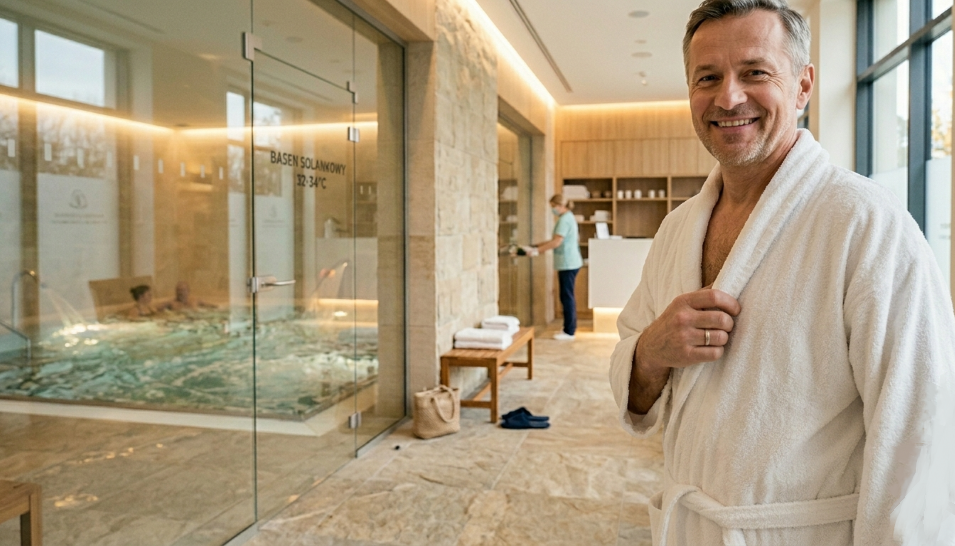
Not every package includes a pool, hydrotherapy, group exercise, or peat mud treatments. Only pack items for the treatment area once you've checked the programme for your stay.
| Item | When is it needed? | Practical tip |
|---|---|---|
| Comfortable exercise clothing | When the package includes exercise classes, therapeutic exercise, or other physical activity sessions. | Choose clothes that don't restrict movement and are easy to put on. |
| Indoor sports shoes | For exercise in the gym or exercise room. | They should be broken in, stable, and clean. |
| Swimsuit | For the pool, hydrotherapy, or wellness zone. | One is usually enough; a second is handy for frequent sessions or slow drying. |
| Swimming cap and goggles | Only if required by the pool rules or for your own comfort. | Confirm the rules before you leave. |
| Pool sandals | In wet areas. | Choose a stable, well-fitting pair with a sole that provides good grip. |
| Light bathrobe | For frequent water treatments, if the facility doesn't provide one. | A quick-drying, lightweight one is best. |
| Bag for wet items | After the pool, baths, and water treatments. | Protects the rest of the bag's contents. |
| An older, dark-coloured towel | Only if the facility recommends bringing your own towel for certain treatments. | Don't pack one by default — ask the facility first. |
5. Everyday and seasonal wardrobe
Layered clothing is the most practical: items can be combined, and individual pieces can be worn in several outfits. Above all, bring things that are tried, tested, and comfortable.
- underwear, socks and pyjamas;
- t-shirts, tops or shirts for everyday wear;
- comfortable trousers, a skirt or a dress — depending on your own preference;
- a sweater, hoodie or fleece, plus a light rain jacket;
- comfortable walking shoes and indoor slippers;
- one neat outfit for a concert, café, or evening gathering;
- a small backpack or light bag for documents, water and things needed between treatments.
| Season | What to add to your suitcase? |
|---|---|
| Summer | A sun hat, sunglasses, sunscreen, light layered clothing, and insect repellent if you usually use one. |
| Winter | A warm coat, hat, gloves, scarf, and comfortable shoes suited to slippery surfaces. |
| Spring and autumn | A rain jacket, layers of varying thickness, an extra pair of comfortable shoes, and a small umbrella. |
6. How many clothes to pack for 7, 14 and 21 days
The quantities below are approximate and assume you can do laundry roughly once a week. If the facility has neither a laundry nor a drying room, pack more clothes. If you do laundry more often, you can bring less.
| Type of item | 7 days | 14 days | 21 days | Notes |
|---|---|---|---|---|
| Underwear and socks | 7–8 sets | 8–10 sets | 10–12 sets | For a longer stay, plan for laundry. |
| T-shirts and tops | 4–5 | 6–7 | 7–9 | Choose items that are easy to mix and match. |
| Trousers, skirts or dresses | 2–3 | 3–4 | 4–5 | Don't count exercise clothing separately. |
| Exercise outfits | 2 | 3 | 3–4 | Adjust this to how often you have exercise sessions. |
| Pyjamas | 1–2 | 2 | 2–3 | Choose something comfortable and easy to wash. |
| Swimsuit | 1–2 | 1–2 | 1–2 | Only if the package includes the pool or water treatments. |
| Smart outfit | 1 | 1 | 1–2 | No need to bring several formal outfits. |
7. Toiletry bag, electronics and small accessories
Toiletry bag and hygiene
- toothbrush and toothpaste, dental floss or other items you use;
- shower gel, shampoo, deodorant and shaving items;
- the toiletries and skincare products you use every day, including a moisturising cream or lotion;
- sunscreen suited to the season and planned activity;
- a comb or brush, nail clippers, tissues and hygiene items;
- a bag for dirty clothes and a separate bag for wet items.
Electronics and personal items
- phone and charger;
- reading glasses, hearing aid and spare batteries;
- a book, e-reader, crossword puzzles or another quiet activity for your free time;
- water bottle, pen and a small notepad;
- payment card and a small amount of cash in small denominations;
- earplugs or an eye mask, if they help you rest in a new place.
Only bring an extension lead, travel kettle, iron, or other device if the facility allows you to use your own and does not provide one.
8. What not to bring
- large amounts of cash, expensive jewellery, and items you would be upset to lose;
- an excess of smart clothes and several pairs of similar shoes;
- new, unworn-in shoes;
- your own bedding and heavy towels, without first checking what the facility provides;
- electrical devices prohibited by the facility's rules;
- large quantities of supplements and over-the-counter medicines you don't normally use;
- documents and medicines packed only in your main suitcase.
9. Printable checklist
Only tick off items once you've actually put them in your bag. Keep documents, medicines and the most important equipment in your hand luggage.
Sanatorium checklist
10. Frequently asked questions
Does the sanatorium provide towels and bedding?
The rules depend on the facility and type of stay. Bedding is usually included with accommodation, but the number of towels, how often they're changed, and whether a bathrobe is available can vary. Check this before you leave.
Do I need to bring a swimming cap to the sanatorium?
Only if required by the rules of the specific pool. Not all facilities have the same rules, so it's best to ask reception or check the information before you leave.
What should I do if I forget a medicine I take regularly?
Contact your clinic. Through the IKP patient portal or the mojeIKP app, you can order an e-prescription for a regularly taken medicine if it was already prescribed and your doctor supports this feature. It's the doctor's decision whether to issue a prescription without an additional consultation.[3] Don't borrow medicines from other people and don't change the dosage on your own.
Do I need a referral for a privately funded sanatorium stay?
A referral from the Polish National Health Fund (NFZ) is not required to book a privately funded stay. However, the facility may require a health questionnaire, medical records, or a medical assessment before certain treatments.
Can I bring a kettle, hairdryer, or extension lead?
First check the room amenities and the rules. Some facilities provide these devices, while others limit the use of your own electrical equipment.
What should I pack for a sanatorium stay in winter?
Add warm layered clothing, a hat, gloves, a scarf, and comfortable shoes suited to wet or slippery surfaces. Don't skip light exercise clothing for indoor use, though.
Can I do laundry on site?
It depends on the facility. Ask about a laundry room, drying room, the cost of the service, and whether an iron is available. The answer will affect how many clothes you need for a 14- or 21-day stay.
Summary: pack what you need, not your whole wardrobe
A good sanatorium packing list takes four things into account: the specific facility, the range of treatments, the season, and the length of stay. Start by preparing documents, medicines and the equipment you use. Then match your clothes to the programme for your stay and the available laundry options. Finally, add items that improve everyday comfort.
You'll save the most space by confirming, before you leave, the room amenities, pool rules, and access to towels, a bathrobe and laundry facilities.
Want to find the perfect place to recover without queues?
Health shouldn't wait in a queue. With the Vitalnia platform you can find availability at the best private sanatoriums and make a secure online booking in minutes. Whether you're booking a stay for yourself or someone you love — take control today.
See what we've prepared for you and your loved ones