


A good sanatorium for joint problems: how to choose a stay and compare offers
How do you choose a good sanatorium for joint problems? Compare the rehabilitation programme, care, accessibility and the full cost of a private stay.
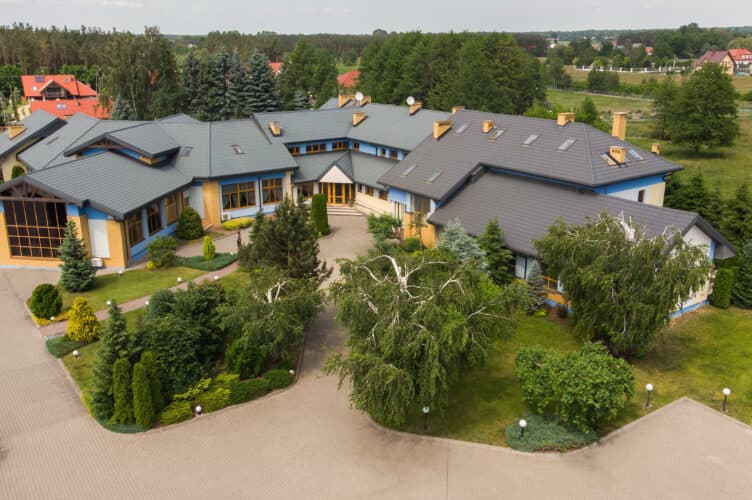
Active-Revital operates within the Hotel Krasnodębski complex. The centre is located in the Masovian Voivodeship, in historic Węgrów — a town that for centuries served as a cultural border between Masovia and Podlasie. Its location in the peaceful, picturesque Liwiec River valley gives the place a close-to-nature setting while remaining easy to reach: it is about 80 km from Warsaw, or roughly an hour's drive.
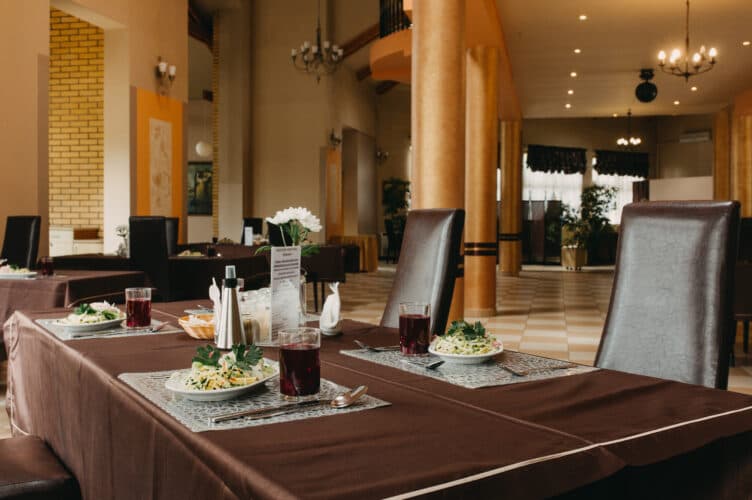
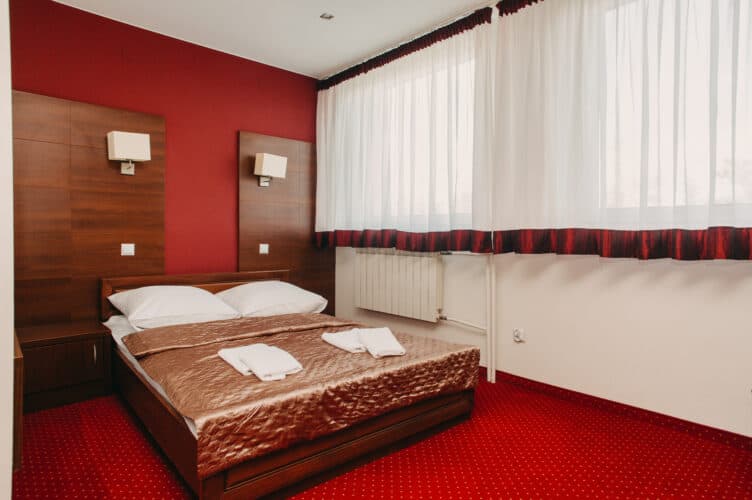
The complex consists of two separate, free-standing buildings marked A and B, differing in location and function. Together they offer 39 rooms and apartments, which with extra beds can accommodate up to 91 guests. Building A stands at the front of the property, directly on Gdańska Street; it houses 20 twin rooms and the main restaurant. This layout makes it easy to find your way around on arrival and keeps the main dining area close by.
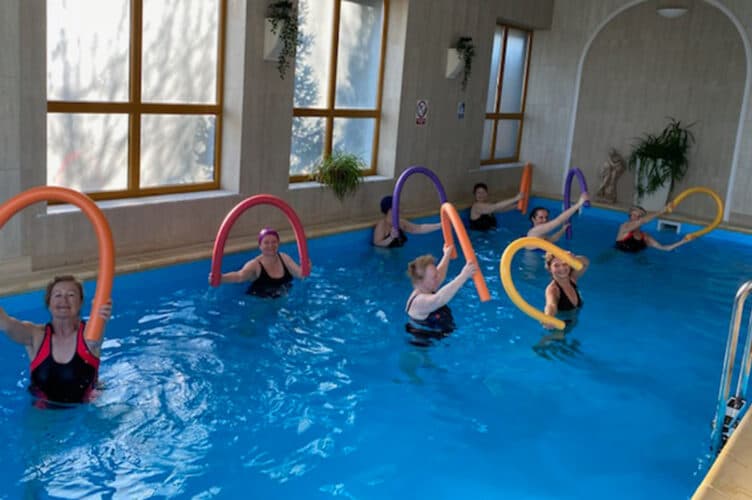
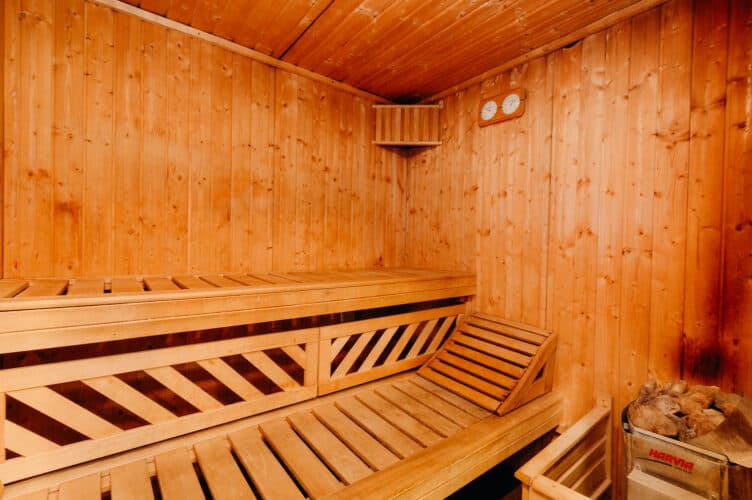
Building B is situated further into the extensive grounds, set back from the public road. This is the therapeutic and organisational heart of the centre: it houses 14 twin rooms, 1 triple room, and 4 spacious apartments. In this part, guests have easy access to a dining room for special diets, lecture rooms, a professionally equipped exercise room, discreet doctors' offices, massage and beauty treatment rooms, and an extensive SPA Centre with an indoor pool. Building B is also home to a large ballroom used for external functions and events.
Between the buildings and at the back of the property lies a garden that serves as a natural relaxation zone. Hidden ponds are connected by attractive wooden footbridges, and the central area features a gazebo, a covered barbecue shelter, and a relaxation terrace. In summer, this is a place to breathe amid the greenery, sit on a bench, and listen to the calm murmur of water.
Stay organisation
Check-in at Active-Revital is from 12:00. This early check-in gives guests time for a calm arrival, unpacking luggage, and settling into the new space before the afternoon block of activities. On the day of departure, the room must be vacated by 10:00.
Stays are closed, precisely planned cycles and come in two variants: 7 days and 14 days. The longer, two-week stay is especially recommended as an option allowing guests to complete the detox programme more fully. For privately funded stays, guests do not need a referral from the Polish National Health Fund (NFZ), a disability certificate or a health certificate from a family doctor.
Assessment of suitability for the fruit-and-vegetable diet takes place on site during an initial consultation with a specialist doctor in the first days of the stay. This is an important safety element, as it allows the programme's rules to be matched to the guest's individual condition right after arrival.
The day has a precise rhythm and requires active involvement. Wake-up and the first activity — breathing exercises — take place at 8:00. Breakfast is served at 9:00, followed by an almost 3-hour block of activities for body and mind. Lunch is served at 13:30, and from 14:00 to 17:45 further physical activities and treatments are planned. Dinner starts at 18:00, while evenings feature social and educational activities.
Quiet hours are from 22:00 to 6:00. Fixed rest hours are an important part of the recovery programme and help the body regain balance after an intensive day.
Additional information
Guests arriving by their own car can use a large, monitored, and guarded car park located directly within the enclosed property. The car therefore stays close to the accommodation and under supervision for the whole stay, including a full 14-day programme, which reduces the stress associated with parking in urban zones. The centre is also pet-friendly. Being able to bring your own dog can matter greatly to a senior for whom a separation lasting around two weeks from a four-legged companion would be a significant emotional barrier.
An important confirmation of the quality of the nutrition programme is the official certificate from the Instytut Promocji Zdrowia dr Ewy Dąbrowskiej. It is a recognisable quality mark and confirms that the procedures used comply with the method's principles.
Active-Revital is located at 80 Gdańska Street in Węgrów, in the wide valley of the Liwiec River. The immediate surroundings are flat for many kilometres. The absence of steep slopes and major unevenness is especially beneficial for seniors, people with orthopaedic complaints, those using crutches or canes, and guests with heart problems. A daily walk here doesn't require extra effort from climbing inclines.
The most important everyday facilities are close to the centre. About 300 m away are shops, a local bus stop, and the revitalised town market square. By the market square lies a park with old-growth trees, where you can walk in the shade of mature trees and take a break from the rhythm of activities.
The Liwiec valley creates a mild, lowland microclimate. The proximity of the river and extensive forested areas is conducive to maintaining constant air humidity and encourages outdoor walks. Guests can walk along marked paths or take part in organised Nordic Walking outings. In summer, the calm, lowland current of the Liwiec creates conditions for gentle kayaking trips, which can be an interesting form of recreation also for older guests in good physical shape. In the centre's garden, resting spots have been prepared amid greenery, and the sound of water from the ponds is conducive to calming down.
Węgrów has a rich, multicultural heritage, and the Szlak Wielokulturowy runs through the town. Within walking distance is a former monastery with underground crypts and a Bazylika Mniejsza. Inside, you can see illusionist Baroque frescoes by Michelangelo Palloni. The sacristy holds a cracked, 16th-century mirror made of metal alloy, which, according to legend, belonged to the master of black magic Jan Twardowski — one of the most intriguing artefacts of its kind in Poland.
On skwer Romana Dmowskiego stands a sculpture depicting the master with an open book, along with a historic bell. During walks, you can also see the well-preserved Dom Gdański, a reminder of the town's merchant past, a former rabbi's house, a unique wooden Evangelical church from the late 17th century, and a former Arian printing house. The centre regularly includes an organised guided tour of Węgrów with a professional guide in the stay's programme, so discovering the history doesn't require planning your own route.
Loading map...
Direct contact with the facility's reception
We combine specialist therapies, an individual approach and modern methods to support your return to health and daily activity.
The above treatment profiles focus on the following categories:
Showing articles 1-4 of 13
How do you choose a good sanatorium for joint problems? Compare the rehabilitation programme, care, accessibility and the full cost of a private stay.

Find out how to choose a sanatorium with a swimming pool. Compare accessibility, type of water, supervision, opening hours and costs, as well as the classes included in the package.

Planning a private stay in Lower Silesia? Compare spa towns, treatment programmes, care, room accessibility and the full cost of the offer on Vitalnia.

Learn the differences between physiotherapy, physical agent therapy and kinesiotherapy. Check treatment names in sanatorium packages and what to ask.
Article
How do you choose a good sanatorium for joint problems? Compare the rehabilitation programme, care, accessibility and the full cost of a private stay.
Article
Find out how to choose a sanatorium with a swimming pool. Compare accessibility, type of water, supervision, opening hours and costs, as well as the classes included in the package.
Article
Planning a private stay in Lower Silesia? Compare spa towns, treatment programmes, care, room accessibility and the full cost of the offer on Vitalnia.
Article
Learn the differences between physiotherapy, physical agent therapy and kinesiotherapy. Check treatment names in sanatorium packages and what to ask.

Article
Planning to go to a sanatorium together? Check the NFZ rules, a sample request, sharing a room and the terms of a private stay for two.

Article
How do you check a facility for a rehabilitation stay for a wheelchair user? See what to verify in the room, bathroom and lift, at treatments and for a carer's stay.

Article
Planning a sanatorium stay with your dog? Check the rules for private and NFZ stays, documents, fees and care for your dog during treatments.

Article
Compare sanatorium packages: treatments, eligibility assessment, care and stay conditions. See how to use Vitalnia's filters to choose a facility.

Article
Affordable private sanatorium: how to compare the full cost of a stay, dates, rooms and treatments, plus Senior Card and PFRON funding rules.

Article
Spine rehabilitation at a sanatorium: learn about treatments, warning signs, the differences between 7-, 14- and 21-day stays, and criteria for choosing a facility.

Article
What to pack for a sanatorium stay of 7, 14 or 21 days? Check the list of documents, medicines, clothes and accessories, plus a printable checklist.

Article
Chronic fatigue, joint pain, or sleep problems? Learn 5 signs worth watching for, and find out when to consult a doctor about them. 2026 guide.

Article
Find out how much a privately funded sanatorium stay costs, how long the wait for treatment funded by the Polish National Health Fund (NFZ) is, and when a privately funded stay may make sense. Full 2026 comparison.