


A good sanatorium for joint problems: how to choose a stay and compare offers
How do you choose a good sanatorium for joint problems? Compare the rehabilitation programme, care, accessibility and the full cost of a private stay.
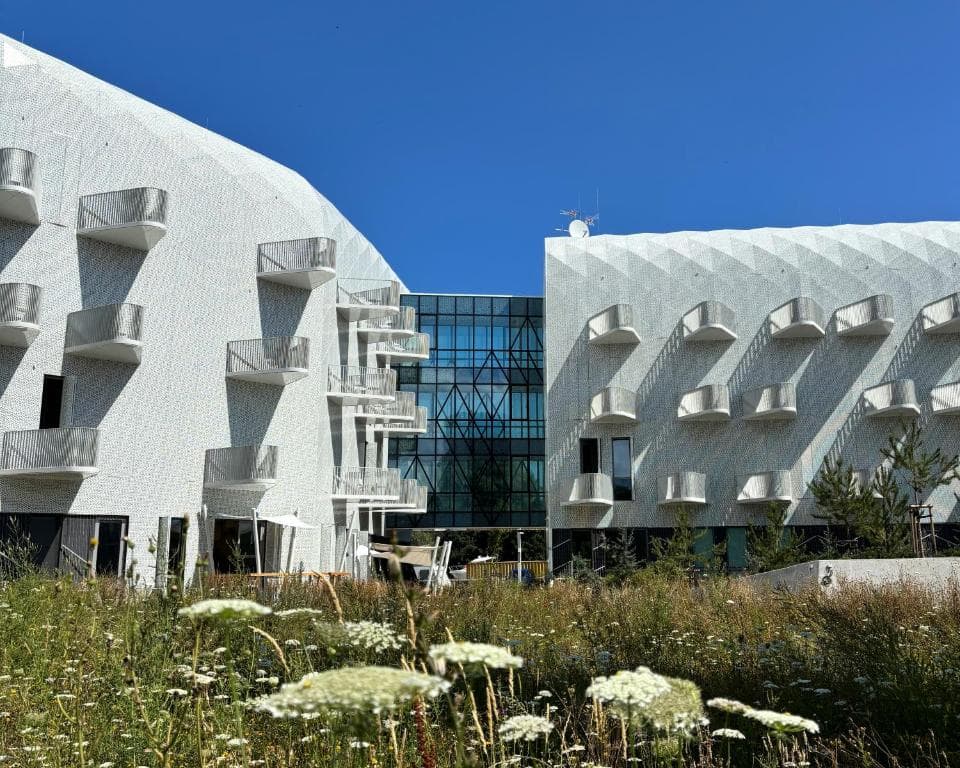

In Sopot's Karlikowo district, on Polna Street, operates NAMI Resort Medyczny, an integral part of the Europejskie Centrum Rodziny INVICTA. The complex covers over 11,000 m² and combines extensive medical, diagnostic, accommodation, and recovery facilities in one organised space. The story of this place began in 2000, when the INVICTA Group began its medical activity. Years of building clinical and research capacity led to the opening of this innovative resort in 2024. It is a conscious departure from the cold image of traditional treatment centres: advanced medicine meets quiet, light, and a sense of deep relaxation here.
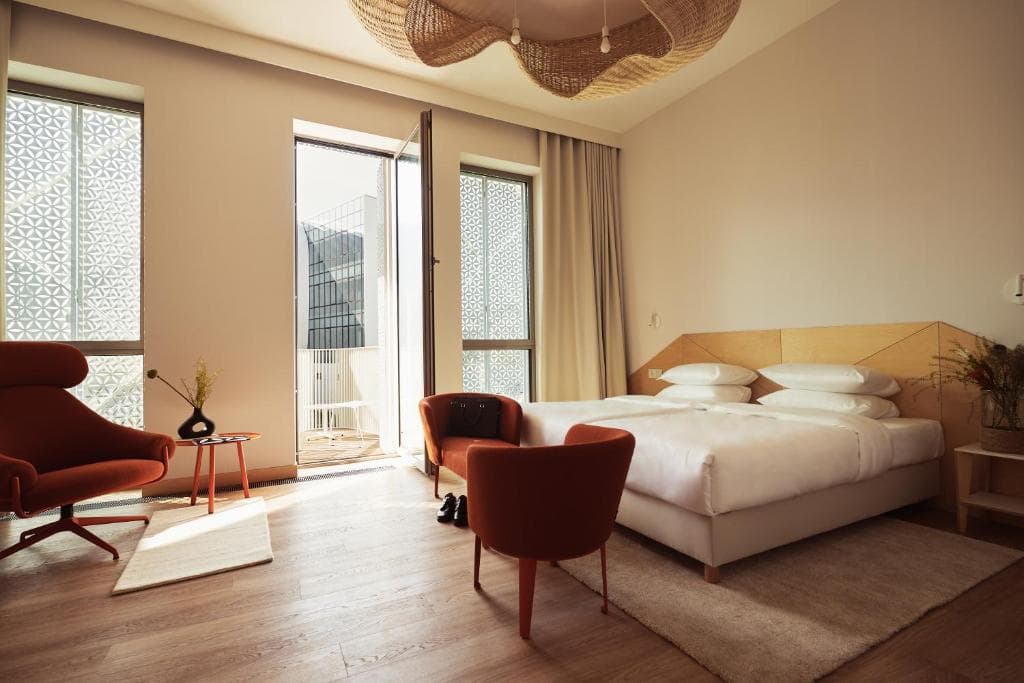
The architecture of the complex housing NAMI Resort Medyczny was designed by the Warsaw-based studio FAAB Architektura. In 2026, the complex's design received a jury award in the global Architizer A+ Awards competition, in the healthcare facilities category. The exterior form references nature, and the rhythm of the facade echoes the movement and ridges of sea waves. A two-layer construction with a white screen reflecting sunlight and a system of shading shutters helps limit interior overheating, protect the rooms' microclimate, and counteract the urban heat island effect. Instead of large glazed panes, windows were used that provide plenty of natural light while maintaining a high level of privacy for guests.
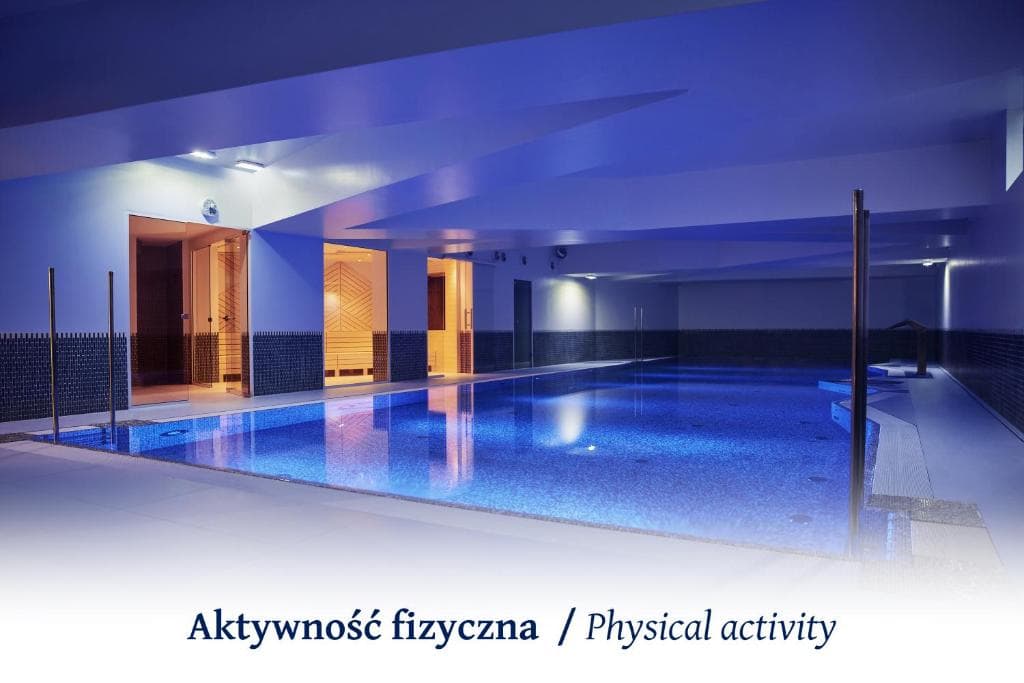
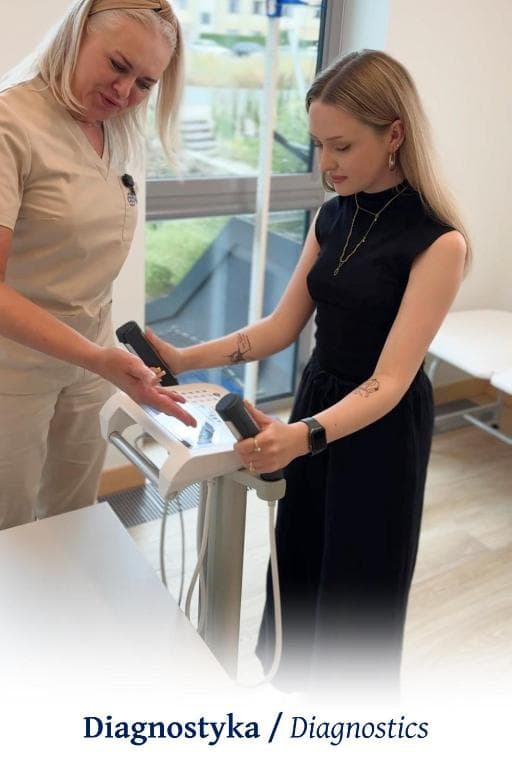
The facilities used by NAMI Resort Medyczny's guests consist of three cooperating zones spread across separate buildings. In the first building, the ground floor houses reception and the restaurant, level -1 has a wellness zone, and rooms are on the 1st, 2nd and 3rd floors. The second building concentrates the medical functions: doctors' offices are on the ground floor and the first two floors, additional rooms are prepared on the 3rd floor, while the basement houses a gym, a hyperbaric chamber, and a cryo-chamber. The third building is an advanced laboratory facility. This layout brings order to the whole stay and allows guests to move from rest to diagnostics, consultations, and treatments without chaos.
The infrastructure was designed without architectural barriers. Wide, quiet corridors give freedom to people who move more slowly, and modern lifts reach every floor. The lift buttons feature Braille markings, making it easier for people with visual impairments to get around independently. Traditional keys and cards have been replaced with a wristband: guests use it to open their room door and operate the lift. This is a practical safety detail that reduces the stress associated with the possibility of losing a key and makes things easier for people with limited hand dexterity.
The interiors are based on natural, soothing materials: warm wood, stone, and glass. In the common areas, hand-woven wicker lamps catch the eye, their organic shapes resembling birdhouses and reinforcing the association with the calm of nature. The environmental facilities are equally well thought out. Beneath the complex is a retention tank with a capacity of over 500,000 litres, collecting rainwater later used for watering plants and flushing toilets. Thanks to this, the investment in health goes hand in hand with responsible resource management here.
Stay organisation
Check-in is from 16:00 on the day of arrival. This gives staff time to thoroughly prepare and air the room after previous guests. On the day of departure, the room must be vacated by 12:00. The schedule is designed for efficient organisation of the stay and a precisely planned therapy programme.
Stays are privately funded, and starting an individual programme requires presenting as complete a picture as possible of your health history to date. It's worth bringing all available medical documentation, including copies of information cards from previous hospitalisations and the most recent laboratory and imaging results. A clear, current list of all regularly used prescription medicines, over-the-counter preparations, herbs, and supplements is also needed. This allows the doctor to safely select physical agent treatments and herbal medicine elements and reduce the risk of unwanted interactions.
The absence of current basic blood tests doesn't delay the start of the medical programme. One of the buildings has an authorised biological sample collection point, where a full panel of analytical and genetic tests can be carried out without a trip to a city clinic. Women choosing programmes related to hormonal balance or urogynaecology are advised to bring a current cytology result. When such a result isn't available, a gynaecological consultation can be arranged and a swab taken directly at the complex's offices.
The first day after check-in is calmer and serves for settling in and getting to know the layout of the buildings. In the evening, a nourishing dinner awaits the guest at the restaurant. The full, systematic medical programme begins on the morning of the second day with a detailed medical assessment. This rhythm allows guests to begin therapy without rushing, with a sense of orientation and security.
Additional information
Every guest using the comprehensive health programme combined with accommodation can leave their car free of charge in the internal, guarded car park closed off by a barrier. Free spaces are also available for people undergoing a course of treatments without accommodation. In that case, the need to park must be reported to reception by phone in advance, so the vehicle's number can be added to the list of those authorised to enter.
Administrative and logistical support operates around the clock. Main reception is open 24 hours a day, 7 days a week. If arriving in Sopot early, or needing to wait for a later train after the stay ends, luggage can be safely left with reception staff. A separate reception coordinating medical treatments works daily from 7:00 to 21:00.
NAMI Resort Medyczny is a medical centre carrying out advanced laboratory diagnostics and accepting people during convalescence, including guests with inhalant allergies. For this reason, a complete ban on bringing animals applies. It covers all dogs, cats, and other animals, and includes the rooms, treatment zones, restaurant, and inner patio. This clear rule helps maintain high sanitary standards and predictable conditions for particularly sensitive people.
Restauracja NAMI operates as an independent dining venue, also open to Sopot residents and passers-by. It admits guests from the age of 16, from Tuesday to Sunday, 7:00–21:00. The quality of the kitchen and its innovative approach to nutrition is confirmed by 3rd place in the prestigious local Sopockie Perły awards, in the strongly contested culinary arts category. The whole complex is also recognised for implementing new technologies and solutions supporting sustainable development, also carried out with co-financing from European funds.
The location on Polna Street in Sopot's Karlikowo district combines closeness to nature with convenient access to the resort's infrastructure. The area around the complex and the whole district have a flat profile. The absence of steep slopes, high steps, and demanding climbs means everyday walks are gentler on the circulatory system, shouldn't cause unnecessary breathlessness, and don't create an additional cardiac challenge. The level space is conducive to people using Nordic Walking poles, walking frames, and wheelchairs.
The buildings stand in a quiet enclave, away from Sopot's main and noisy tourist thoroughfares. At the very heart of the complex, a Ogród Nadmorski has been arranged, with selected plant species referencing wild dune vegetation. Comfortable benches have been placed along level paths, creating a safe spot for morning reading and calming down after treatments amid birdsong. Most rooms have an eastern or western exposure and a view of the garden, the outline of Sopot's historic buildings, or the greenery of the Trójmiejski Park Krajobrazowy.
From the entrance to the wide, sandy beach it's just 400 m. A walk to the Gulf of Gdańsk allows regular use of the seaside microclimate. Sea air and the breeze support natural body oxygenation. The breeze carries brine aerosol with fine particles of iodine, important for proper thyroid function, and bromine, associated with a calming effect. Such natural inhalation can support people with respiratory and immune complaints.
Walking the coastal route north, you can reach Park Północny, a historic forest-park area covering 25 hectares. The park stretches for about 2 km along the shore to the border with Gdynia, marked by the picturesque Swelinia stream. Avenues run in the shade of pines, beeches, oaks, and maples. Pedestrian and rollerblading routes are separated from fast cycle paths, which reduces the risk of collisions. Along the level, shaded avenues, many benches have been placed, where you can rest while watching the sea glimmer between the trees.
Skwer Kuracyjny, the zabytkowe Molo, the historyczne Łazienki Południowe, and Park Południowy can be reached in about 20 minutes. The route is about 1.5 km and follows level, seaside avenues. On the way to the centre, it's worth visiting the Dom Zdrojowy and the medicinal water pump room. Within walking distance is also the revitalised Błonia Sopockie: a fully flat, publicly accessible recreational area with a sensory garden, medicinal herb beds, and plants releasing soothing aromas.
Loading map...
Direct contact with the facility's reception
We combine specialist therapies, an individual approach and modern methods to support your return to health and daily activity.
The above treatment profiles focus on the following categories:
Showing articles 1-4 of 13
How do you choose a good sanatorium for joint problems? Compare the rehabilitation programme, care, accessibility and the full cost of a private stay.

Find out how to choose a sanatorium with a swimming pool. Compare accessibility, type of water, supervision, opening hours and costs, as well as the classes included in the package.

Planning a private stay in Lower Silesia? Compare spa towns, treatment programmes, care, room accessibility and the full cost of the offer on Vitalnia.

Learn the differences between physiotherapy, physical agent therapy and kinesiotherapy. Check treatment names in sanatorium packages and what to ask.
Article
How do you choose a good sanatorium for joint problems? Compare the rehabilitation programme, care, accessibility and the full cost of a private stay.
Article
Find out how to choose a sanatorium with a swimming pool. Compare accessibility, type of water, supervision, opening hours and costs, as well as the classes included in the package.
Article
Planning a private stay in Lower Silesia? Compare spa towns, treatment programmes, care, room accessibility and the full cost of the offer on Vitalnia.
Article
Learn the differences between physiotherapy, physical agent therapy and kinesiotherapy. Check treatment names in sanatorium packages and what to ask.

Article
Planning to go to a sanatorium together? Check the NFZ rules, a sample request, sharing a room and the terms of a private stay for two.

Article
How do you check a facility for a rehabilitation stay for a wheelchair user? See what to verify in the room, bathroom and lift, at treatments and for a carer's stay.

Article
Planning a sanatorium stay with your dog? Check the rules for private and NFZ stays, documents, fees and care for your dog during treatments.

Article
Compare sanatorium packages: treatments, eligibility assessment, care and stay conditions. See how to use Vitalnia's filters to choose a facility.

Article
Affordable private sanatorium: how to compare the full cost of a stay, dates, rooms and treatments, plus Senior Card and PFRON funding rules.

Article
Spine rehabilitation at a sanatorium: learn about treatments, warning signs, the differences between 7-, 14- and 21-day stays, and criteria for choosing a facility.

Article
What to pack for a sanatorium stay of 7, 14 or 21 days? Check the list of documents, medicines, clothes and accessories, plus a printable checklist.

Article
Chronic fatigue, joint pain, or sleep problems? Learn 5 signs worth watching for, and find out when to consult a doctor about them. 2026 guide.

Article
Find out how much a privately funded sanatorium stay costs, how long the wait for treatment funded by the Polish National Health Fund (NFZ) is, and when a privately funded stay may make sense. Full 2026 comparison.