


A good sanatorium for joint problems: how to choose a stay and compare offers
How do you choose a good sanatorium for joint problems? Compare the rehabilitation programme, care, accessibility and the full cost of a private stay.
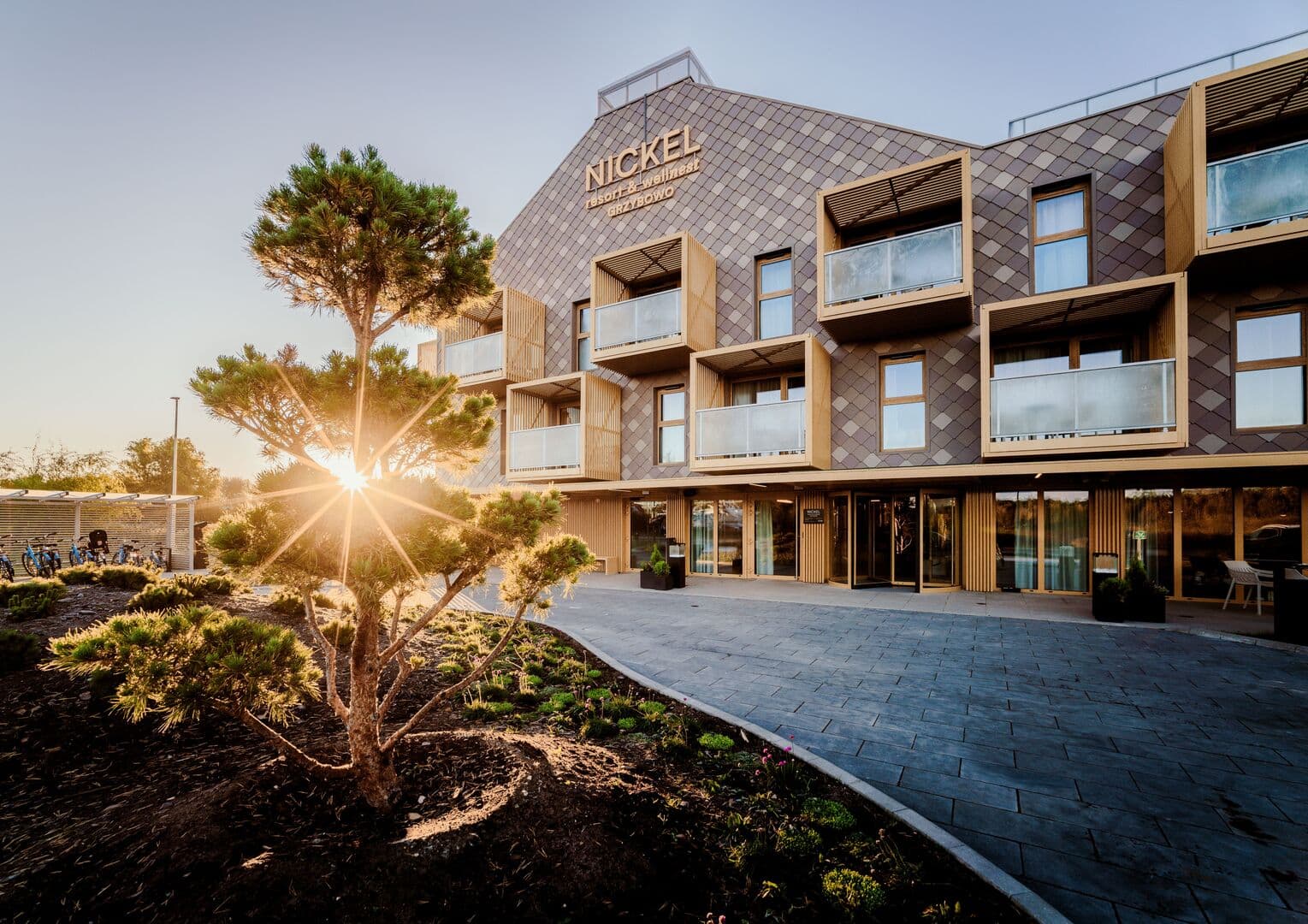
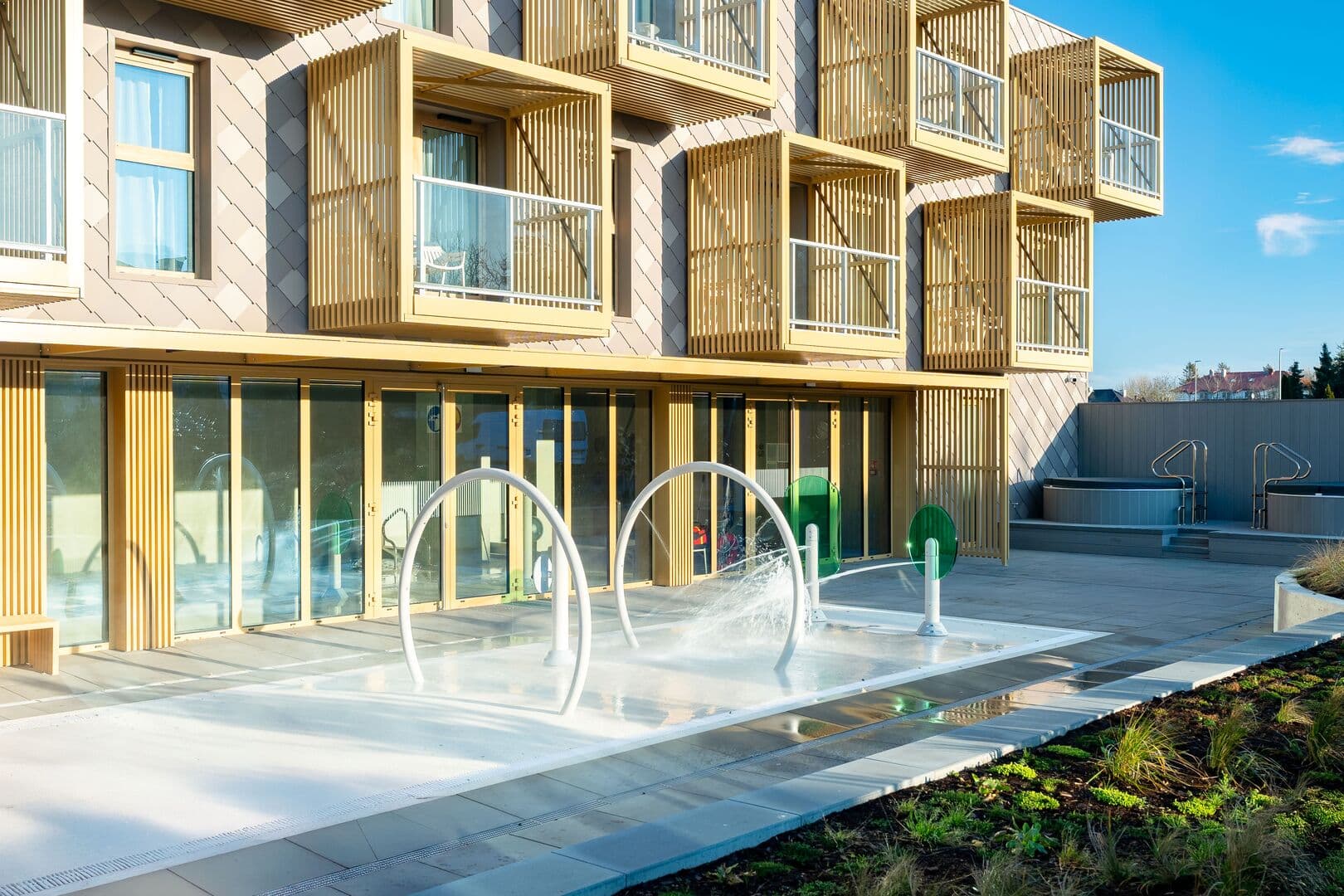
This modern recreational and therapeutic complex was put into use in the fourth quarter of 2025. It was built in a seaside holiday village, just a dozen or so minutes from the centre of a large resort town. Instead of the monumental form known from older sanatorium buildings, a light, non-basemented structure was chosen, comprising a ground floor and only 2 upper floors. This intimate, human scale makes it easier for a senior to find their way around and reduces the risk of feeling lost in a vast space.
The seaside character is visible from the outside: a sloping roof and details inspired by regional beach baskets evoke calm, nostalgic associations with a classic holiday by the Baltic. Facades echoing the structure of fish scales, extensive glazing, and natural wood mean the building visually blends with the surrounding forest. This is contemporary architecture with a local identity, allowing a health stay to take place in friendly, non-overwhelming surroundings.
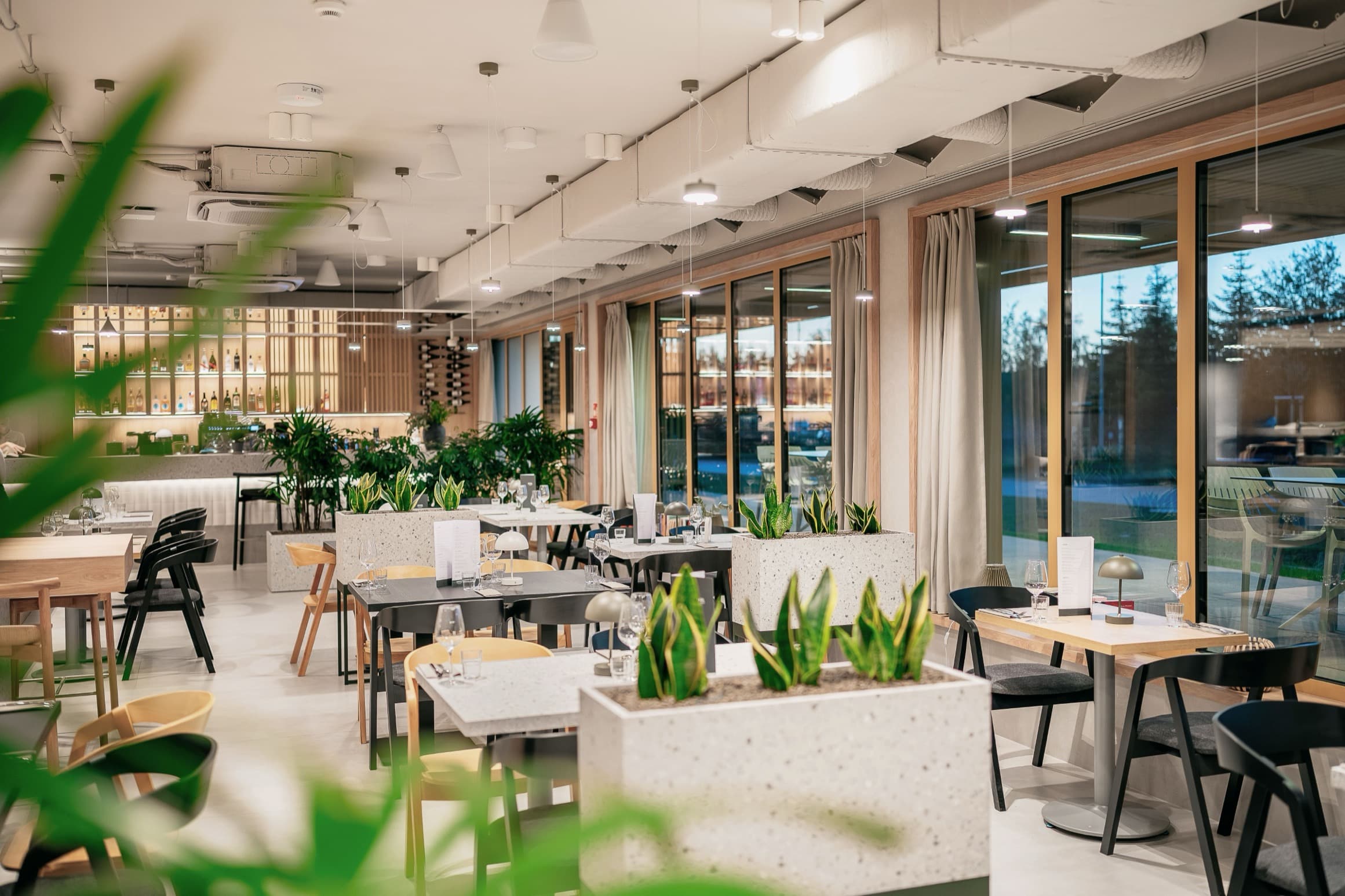
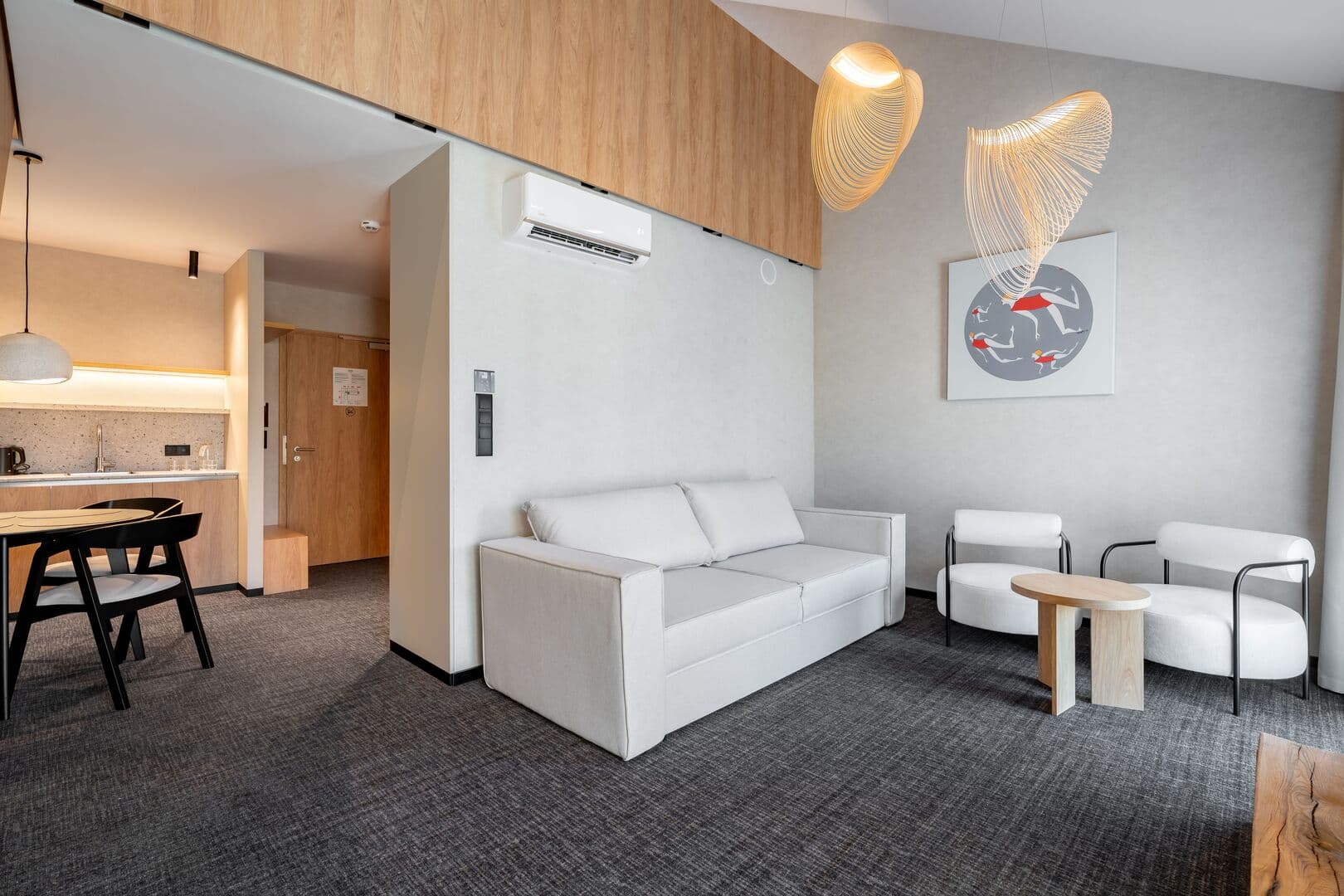
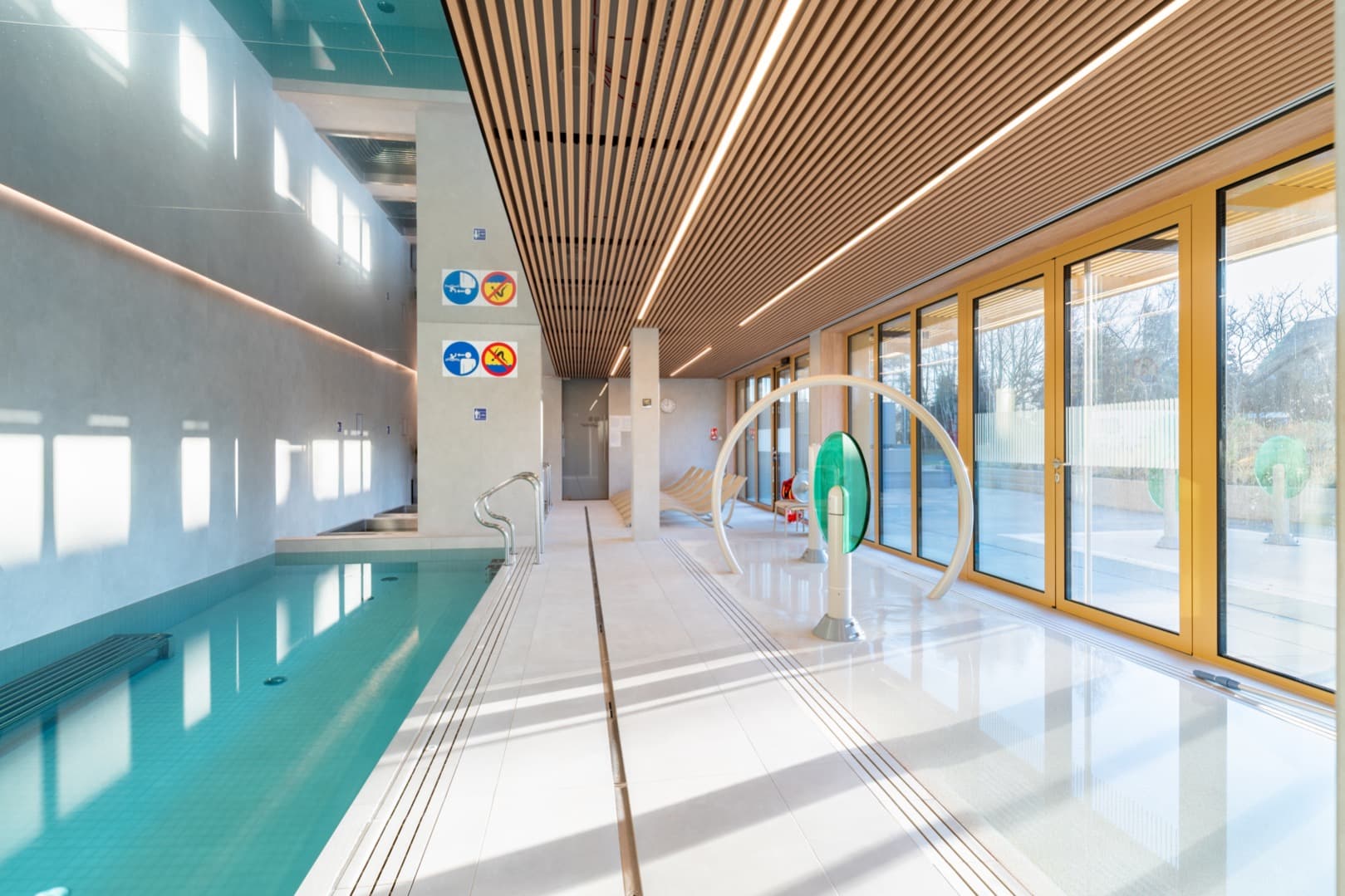
The interiors follow a modern medical wellness formula and were designed according to biophilic philosophy, meaning a clear presence of nature within enclosed spaces. Natural materials, muted earth tones, and soft, diffused light are meant to help lower tension, support healthy blood pressure, and stimulate cognitive processes in seniors. Stimuli chosen in this way limit the overstimulation associated with sterile, fluorescent lighting. The spacious lobby with round-the-clock reception and the other common areas are meant to soothe the senses and give guests the sense that organisational help is close at hand around the clock.
The infrastructure has been clearly adapted to the needs of people with reduced mobility. The entire property is fenced, and modern, quiet-running lifts reach every residential floor, even though the building has only 3 levels. A senior using a rehabilitation walking frame, an orthopaedic cane, or a wheelchair can move around without having to negotiate stairs. The intuitive layout of the corridors, the absence of unnecessary thresholds, and the limiting of architectural barriers support independence and make it easier to find your way around and move about the facility.
Stay organisation
The centre operates as a private premium-class holiday and therapy facility operating on a self-funded basis. It combines recreation with therapy and is intended for people looking for a comfortable, privately organised stay focused on health and recovery.
The resort is located on Nadmorska Street in quiet Grzybowo, neighbouring the lively town of Kołobrzeg. This is a sensible compromise between escaping urban bustle and pollution and having access to the infrastructure of a large resort town: Kołobrzeg's centre lies less than 7 km away and can be reached by car in under 10 minutes. The wide, clean, sandy beach is about 800 m from the facility.
An important advantage for a senior is the completely flat terrain profile. The way to the sea doesn't require climbing uphill, negotiating high steps, or forcing your way through tiring sandy dunes. It follows a paved, well-maintained trail through a picturesque spruce-pine forest, where the scent of pines blends with the sea air. This route is also more comfortable for people using a cane or Nordic Walking poles.
Right by the building, a green oasis has been arranged with a spacious garden and an internal patio. Numerous ergonomic benches, covered pergolas, comfortable loungers, and wooden swings with backrests await guests. Densely placed resting spots allow a person with weaker fitness to take frequent breaks, spend longer outdoors, and safely enjoy the sun needed for vitamin D synthesis.
Grzybowo is valued for its favourable seaside microclimate, used for therapeutic purposes for decades, and crystal-clear air saturated with sea aerosol containing iodine, bromine, and salt particles. Walking in such a microclimate acts like a natural, continuous inhalation: it's meant to moisten and cleanse the mucous membranes, support therapy for chronic upper respiratory tract infections, and proper thyroid function. The qualities of this coastal zone are strengthened by the proximity of local brine springs and natural peat mud deposits.
Everyday matters can be handled without far trips: within a short walk are well-stocked grocery shops, cosy cafés, local restaurants, and seaside stalls with freshly smoked fish. The area has a dense network of paved cycle paths. After a short trip by public transport or bicycle, you can visit, in Kołobrzeg, the extensive, shaded Park Zdrojowy, the new old town with its historic street layout around the town hall, a pier extending over 200 m into the sea, and a lighthouse with a viewing terrace at a height of 26 m and a panorama of the coast.
Loading map...
Direct contact with the facility's reception
We combine specialist therapies, an individual approach and modern methods to support your return to health and daily activity.
The above treatment profiles focus on the following categories:
Showing articles 1-4 of 13
How do you choose a good sanatorium for joint problems? Compare the rehabilitation programme, care, accessibility and the full cost of a private stay.

Find out how to choose a sanatorium with a swimming pool. Compare accessibility, type of water, supervision, opening hours and costs, as well as the classes included in the package.

Planning a private stay in Lower Silesia? Compare spa towns, treatment programmes, care, room accessibility and the full cost of the offer on Vitalnia.

Learn the differences between physiotherapy, physical agent therapy and kinesiotherapy. Check treatment names in sanatorium packages and what to ask.
Article
How do you choose a good sanatorium for joint problems? Compare the rehabilitation programme, care, accessibility and the full cost of a private stay.
Article
Find out how to choose a sanatorium with a swimming pool. Compare accessibility, type of water, supervision, opening hours and costs, as well as the classes included in the package.
Article
Planning a private stay in Lower Silesia? Compare spa towns, treatment programmes, care, room accessibility and the full cost of the offer on Vitalnia.
Article
Learn the differences between physiotherapy, physical agent therapy and kinesiotherapy. Check treatment names in sanatorium packages and what to ask.

Article
Planning to go to a sanatorium together? Check the NFZ rules, a sample request, sharing a room and the terms of a private stay for two.

Article
How do you check a facility for a rehabilitation stay for a wheelchair user? See what to verify in the room, bathroom and lift, at treatments and for a carer's stay.

Article
Planning a sanatorium stay with your dog? Check the rules for private and NFZ stays, documents, fees and care for your dog during treatments.

Article
Compare sanatorium packages: treatments, eligibility assessment, care and stay conditions. See how to use Vitalnia's filters to choose a facility.

Article
Affordable private sanatorium: how to compare the full cost of a stay, dates, rooms and treatments, plus Senior Card and PFRON funding rules.

Article
Spine rehabilitation at a sanatorium: learn about treatments, warning signs, the differences between 7-, 14- and 21-day stays, and criteria for choosing a facility.

Article
What to pack for a sanatorium stay of 7, 14 or 21 days? Check the list of documents, medicines, clothes and accessories, plus a printable checklist.

Article
Chronic fatigue, joint pain, or sleep problems? Learn 5 signs worth watching for, and find out when to consult a doctor about them. 2026 guide.

Article
Find out how much a privately funded sanatorium stay costs, how long the wait for treatment funded by the Polish National Health Fund (NFZ) is, and when a privately funded stay may make sense. Full 2026 comparison.