


A good sanatorium for joint problems: how to choose a stay and compare offers
How do you choose a good sanatorium for joint problems? Compare the rehabilitation programme, care, accessibility and the full cost of a private stay.
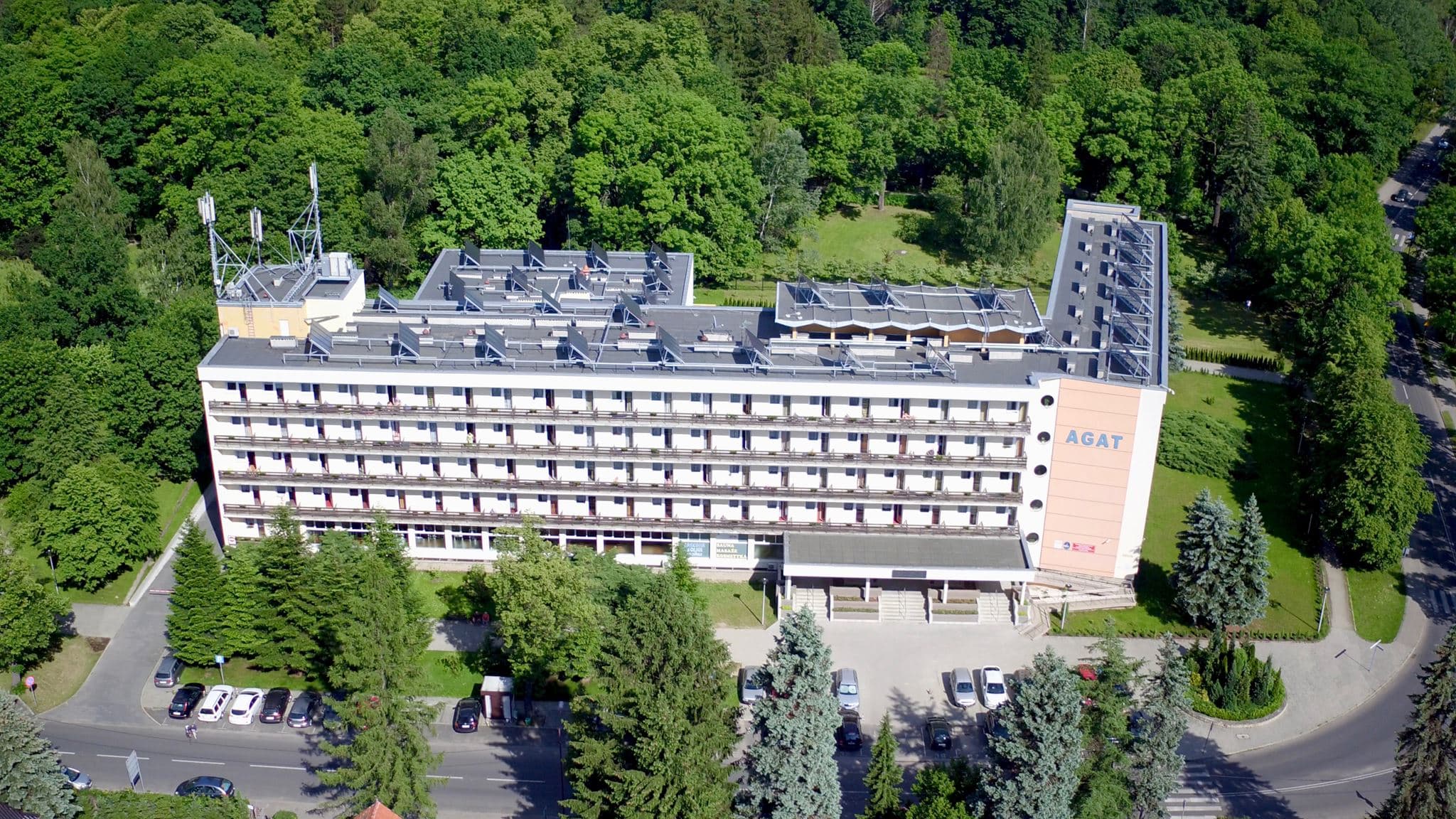
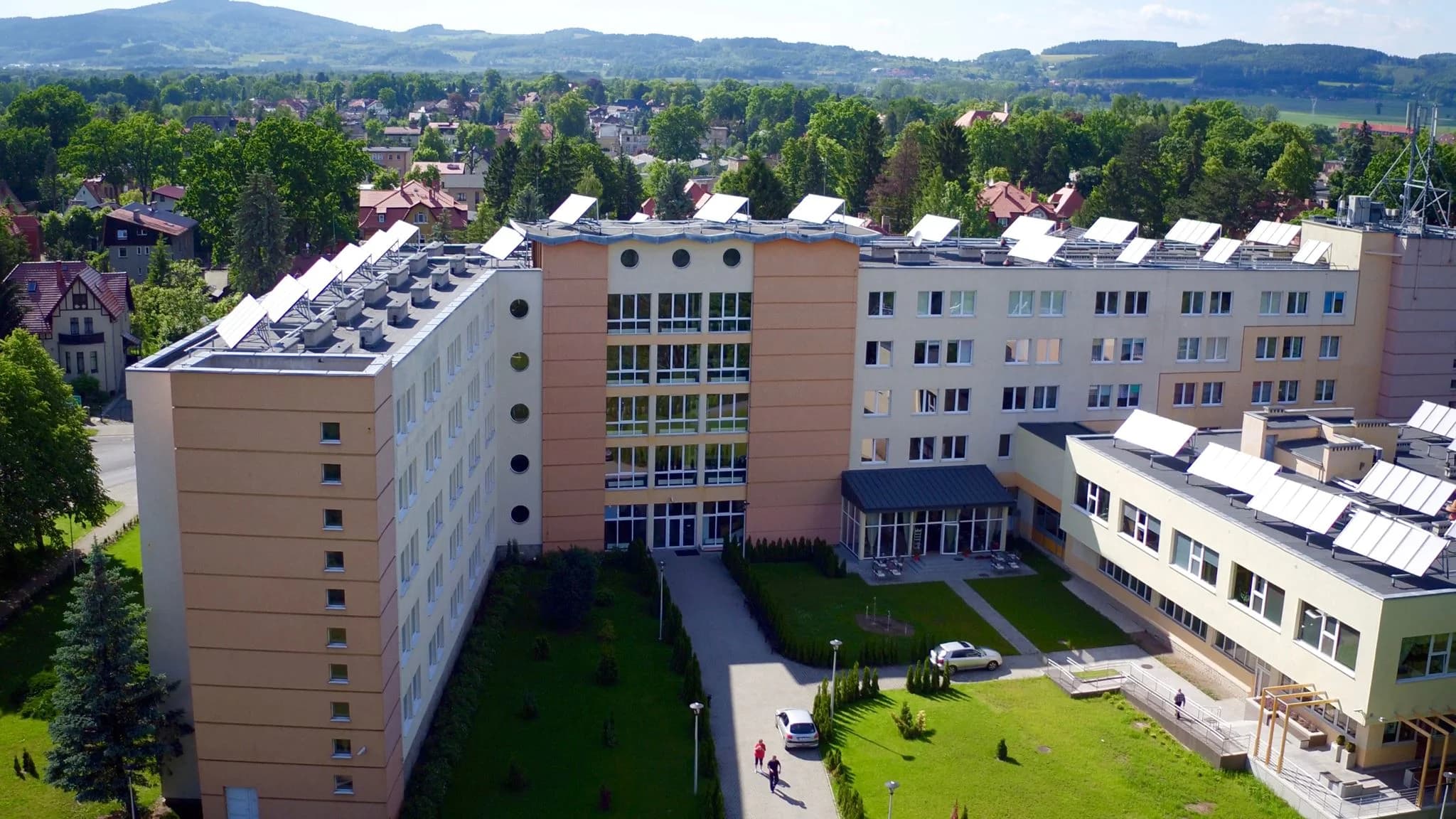
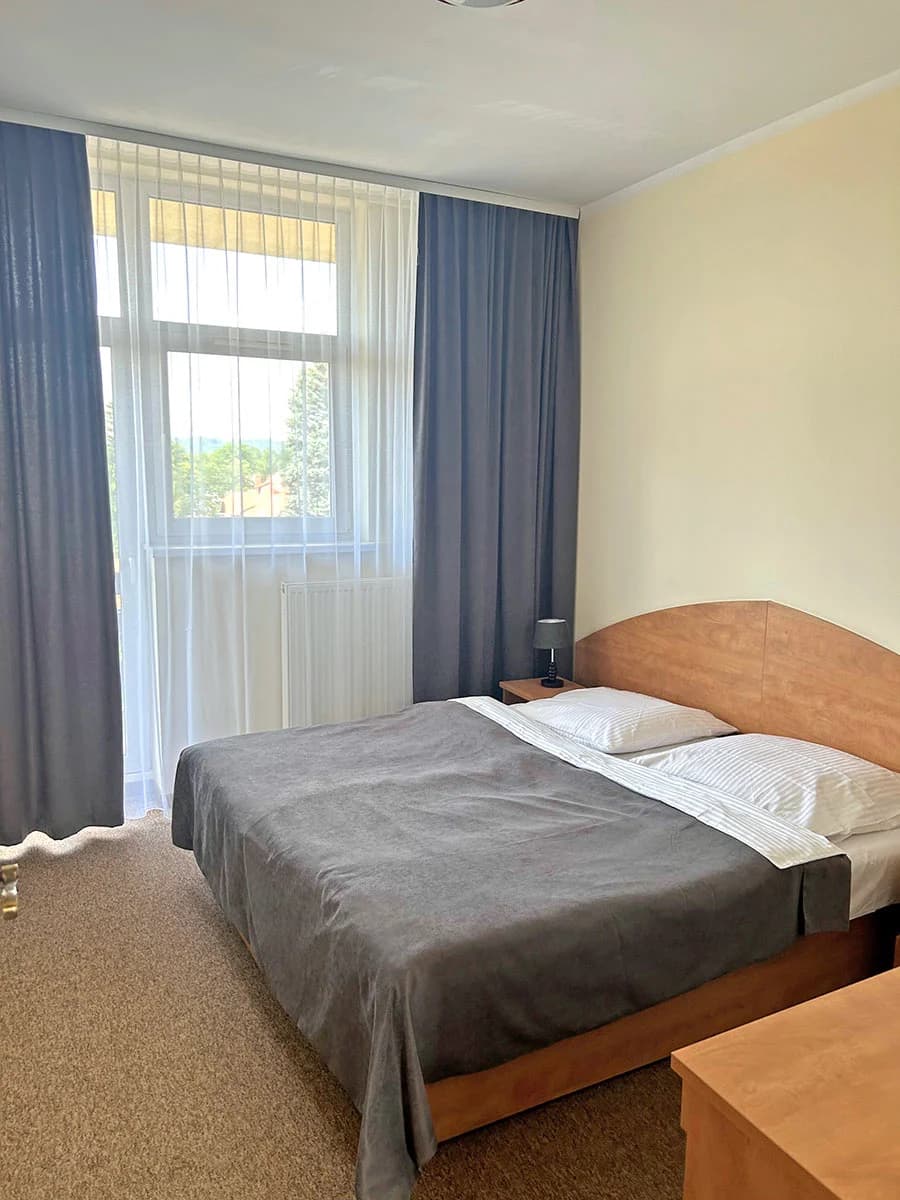
The Sanatorium Uzdrowiskowe Agat is a place with extensive medical facilities and a calm, spa character. It operates as an Independent Public Healthcare Institution under the supervision of the Ministry of the Interior and Administration, which for the guest and their family is an important signal of organisational reliability, hygiene and orderly care. The facility is located in Jelenia Góra, in the prestigious district of Cieplice Śląskie-Zdrój — the heart of the oldest health resort in Poland. It is a choice that combines the classic balneological tradition of the Sudetes with the requirements of contemporary rehabilitation.
The sanatorium building was erected on an L-shaped plan and has four above-ground storeys. Its structure faces south and south-west, thanks to which most rooms enjoy natural light for a significant part of the day. For a mum, dad or senior this matters not only aesthetically, but also emotionally: the day begins here brighter and calmer, with a view of the Karkonosze Mountains, including Śnieżka, the Snowy Cirques and Szrenica. This panorama is a constant element of the stay and a reminder that the investment in health is taking place in a space conducive to recovery.
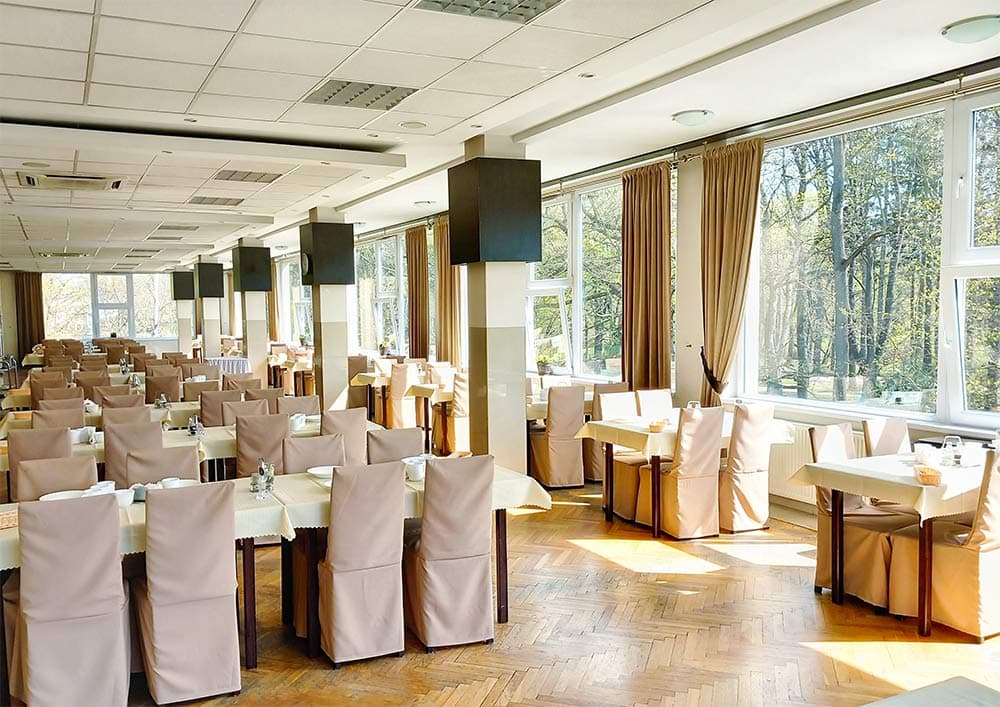
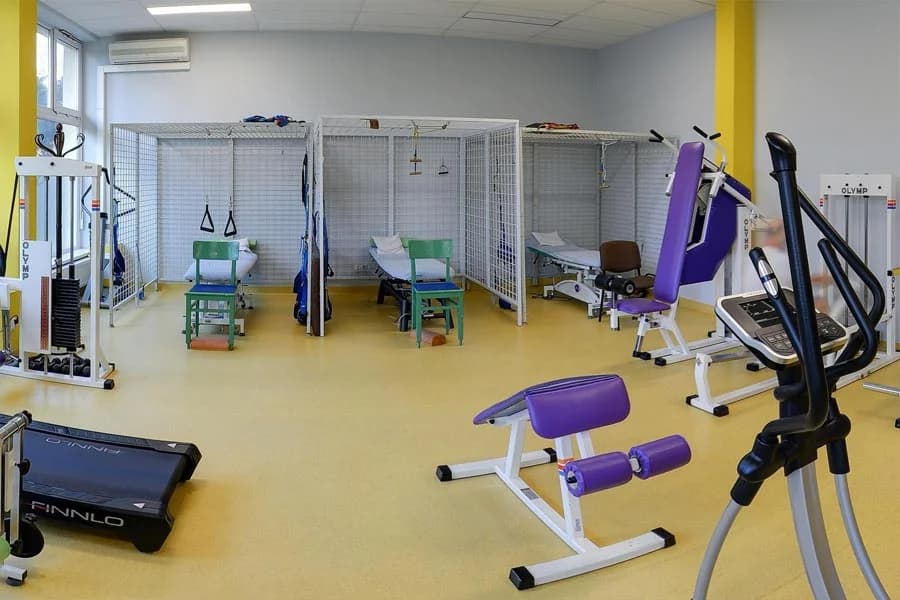
Over the decades Agat developed from a classic spa house into a specialised therapeutic sanatorium. Today everything is available under one roof: guest rooms, the dining room, the catering facilities, a café and the extensive treatment section are housed in a single structure. This is a very practical solution for seniors, especially in worse weather, rain or winter cold, because the guest does not have to go outside to reach therapy or a meal.
The interiors reference classic spa tradition and have the atmosphere of a place with soul. The sanatorium is undergoing staged renovations: the rooms on the first and second floors have already been renewed and offer the standard of a modern medical facility. Agat focuses on functionality, care and calm, spa-style everyday life.
The logistics of moving around the building were planned with people with limited mobility in mind. Three lifts are available, connecting the residential floors with the treatment and dining sections. The entrance from the Spa Park side is free of architectural barriers, and on the Cervi street side a specialist ramp for wheelchairs has been prepared, giving safe and smooth access to the reception.
The facility promotes the medical-care standards of the Ministry of the Interior and Administration, which translates into orderly organisation, attention to hygiene and a sense of safety. The sanatorium has its own garden with benches, a natural extension of the nearby Spa Park and Norwegian Park. Quiet, greenery, calm paths and the closeness of the staff create an atmosphere in which a senior can rest without haste. Agat has 230 beds, making it one of the larger facilities in Cieplice, and accommodates both guests whose stays are funded by the Polish National Health Fund (NFZ) and guests on privately funded stays.
Stay organisation
Meals at Agat include three meals a day served in the dining room. The kitchen prepares diets adapted to the needs of older people, including an easily digestible diet, diabetic, liver, and low-purine diets. Breakfast and dinner are varied, with a buffet including, among other things, milk soups, bread, and jams. Lunch is served at the table, and soup is available unlimited from warming trays. For many seniors, this meal rhythm gives a sense of home-like order and predictability.
In the facility's regulations, quiet hours and the building's closing time are important. The entrance doors are locked at 22:00, so evening outings should be planned in advance. For longer stays, a practical convenience is the option to use an iron and ironing board from the nursing staff. This is a small detail, but it helps maintain daily independence and tidiness without needing to bring extra equipment from home.
Additional information
Parking by the sanatorium is paid, and the number of spaces is limited. The facility does not accept pets. This rule helps maintain the hygiene standards of a medical sanatorium and the comfort of all guests, including those with allergies or reduced immunity. Agat holds the HACCP certificate, confirming attention to the quality and safety of the meals prepared. For a senior's family, this is an important signal that the kitchen operates according to controlled procedures.
Free Wi-Fi internet is available at designated points, such as day rooms and main corridors.
Sanatorium Agat has one of the best locations in Cieplice Śląskie-Zdrój. It lies between two historic parks: the Park Zdrojowy and the Park Norweski, in the southern part of the Jelenia Góra Valley, at an altitude of about 350 m above sea level. For a senior, this location is particularly valuable, as the terrain directly around the sanatorium is flat. People with heart disease, weaker fitness or musculoskeletal impairments can plan walks without worrying about burdensome climbs.
The proximity of the Park Zdrojowy gives access to the mineral water pump room and picturesque paths lined with old trees. In the sanatorium garden and along the park routes, benches are densely placed, so a guest can sit and rest exactly when they need it. This is a small but very important element of care logistics: a walk doesn't have to be a challenge, it can be a safe health ritual, interrupted by moments in the shade of trees.
Cieplice has been known for centuries for its favourable microclimatic properties. Its location at the foot of the Karkonosze Mountains supports clean air, and the mountains shield the town from strong northern winds. The view of Śnieżka, dominating the horizon, accompanies the stay and underscores the mountain character of the resort. For many guests, this is a daily, calm framework for the day: morning gymnastics, treatments, a walk and rest with the panorama of the Karkonosze Mountains in the background.
Within walking distance is the Cieplice promenade with cafés, ice cream parlours and souvenir shops. Guests can visit nearby museums, including the Muzeum Przyrodnicze housed in a former post-Cistercian complex. The nearest grocery shop can be reached in a few minutes along a flat pavement, which matters greatly for those who want to buy small items independently but don't want to use a taxi or negotiate difficult terrain.
Public transport matters for more mobile guests. Nearby is a bus stop from which line no. 9 departs, providing a direct connection to the main PKP railway station in Jelenia Góra. Within a radius of about 15 km are popular regional attractions, including the świątynia Wang in Karpacz and the Park Dinozaurów. Optional trips to such places are often organised, allowing a health stay to be combined with gentle exploration of Lower Silesia.
Loading map...
Direct contact with the facility's reception
We combine specialist therapies, an individual approach and modern methods to support your return to health and daily activity.
The above treatment profiles focus on the following categories:
Showing articles 1-4 of 13
How do you choose a good sanatorium for joint problems? Compare the rehabilitation programme, care, accessibility and the full cost of a private stay.

Find out how to choose a sanatorium with a swimming pool. Compare accessibility, type of water, supervision, opening hours and costs, as well as the classes included in the package.

Planning a private stay in Lower Silesia? Compare spa towns, treatment programmes, care, room accessibility and the full cost of the offer on Vitalnia.

Learn the differences between physiotherapy, physical agent therapy and kinesiotherapy. Check treatment names in sanatorium packages and what to ask.
Article
How do you choose a good sanatorium for joint problems? Compare the rehabilitation programme, care, accessibility and the full cost of a private stay.
Article
Find out how to choose a sanatorium with a swimming pool. Compare accessibility, type of water, supervision, opening hours and costs, as well as the classes included in the package.
Article
Planning a private stay in Lower Silesia? Compare spa towns, treatment programmes, care, room accessibility and the full cost of the offer on Vitalnia.
Article
Learn the differences between physiotherapy, physical agent therapy and kinesiotherapy. Check treatment names in sanatorium packages and what to ask.

Article
Planning to go to a sanatorium together? Check the NFZ rules, a sample request, sharing a room and the terms of a private stay for two.

Article
How do you check a facility for a rehabilitation stay for a wheelchair user? See what to verify in the room, bathroom and lift, at treatments and for a carer's stay.

Article
Planning a sanatorium stay with your dog? Check the rules for private and NFZ stays, documents, fees and care for your dog during treatments.

Article
Compare sanatorium packages: treatments, eligibility assessment, care and stay conditions. See how to use Vitalnia's filters to choose a facility.

Article
Affordable private sanatorium: how to compare the full cost of a stay, dates, rooms and treatments, plus Senior Card and PFRON funding rules.

Article
Spine rehabilitation at a sanatorium: learn about treatments, warning signs, the differences between 7-, 14- and 21-day stays, and criteria for choosing a facility.

Article
What to pack for a sanatorium stay of 7, 14 or 21 days? Check the list of documents, medicines, clothes and accessories, plus a printable checklist.

Article
Chronic fatigue, joint pain, or sleep problems? Learn 5 signs worth watching for, and find out when to consult a doctor about them. 2026 guide.

Article
Find out how much a privately funded sanatorium stay costs, how long the wait for treatment funded by the Polish National Health Fund (NFZ) is, and when a privately funded stay may make sense. Full 2026 comparison.