


A good sanatorium for joint problems: how to choose a stay and compare offers
How do you choose a good sanatorium for joint problems? Compare the rehabilitation programme, care, accessibility and the full cost of a private stay.
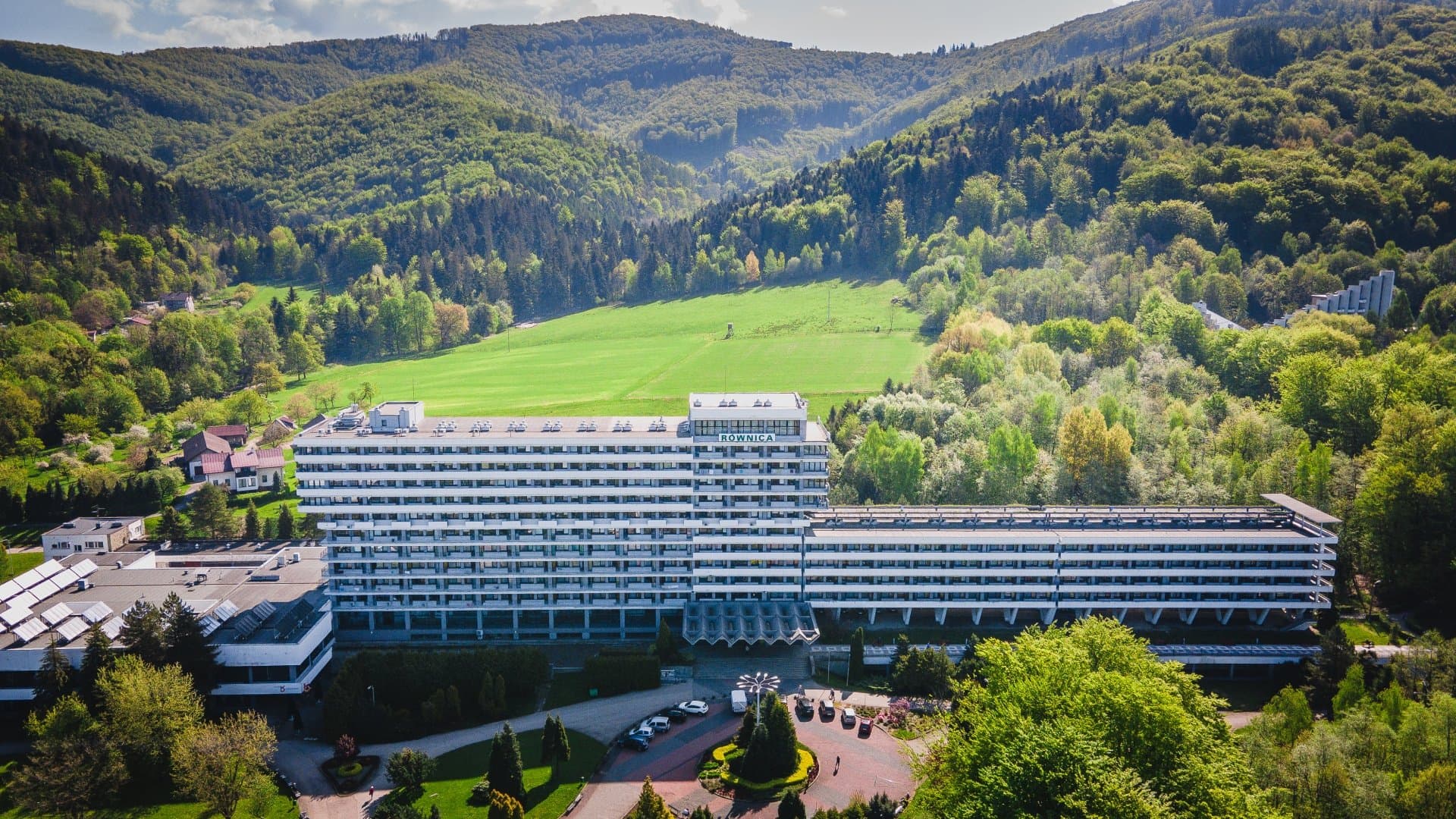
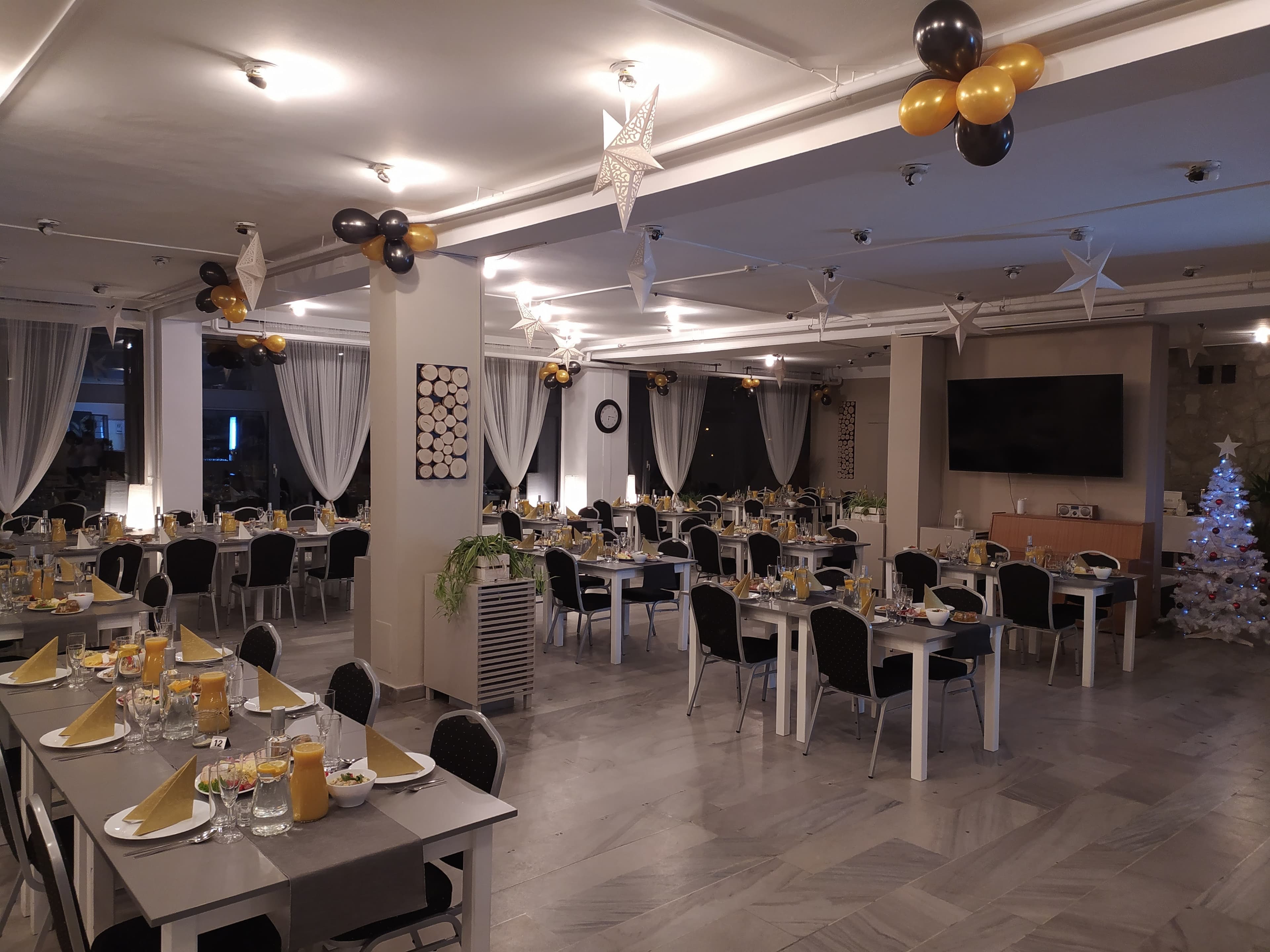
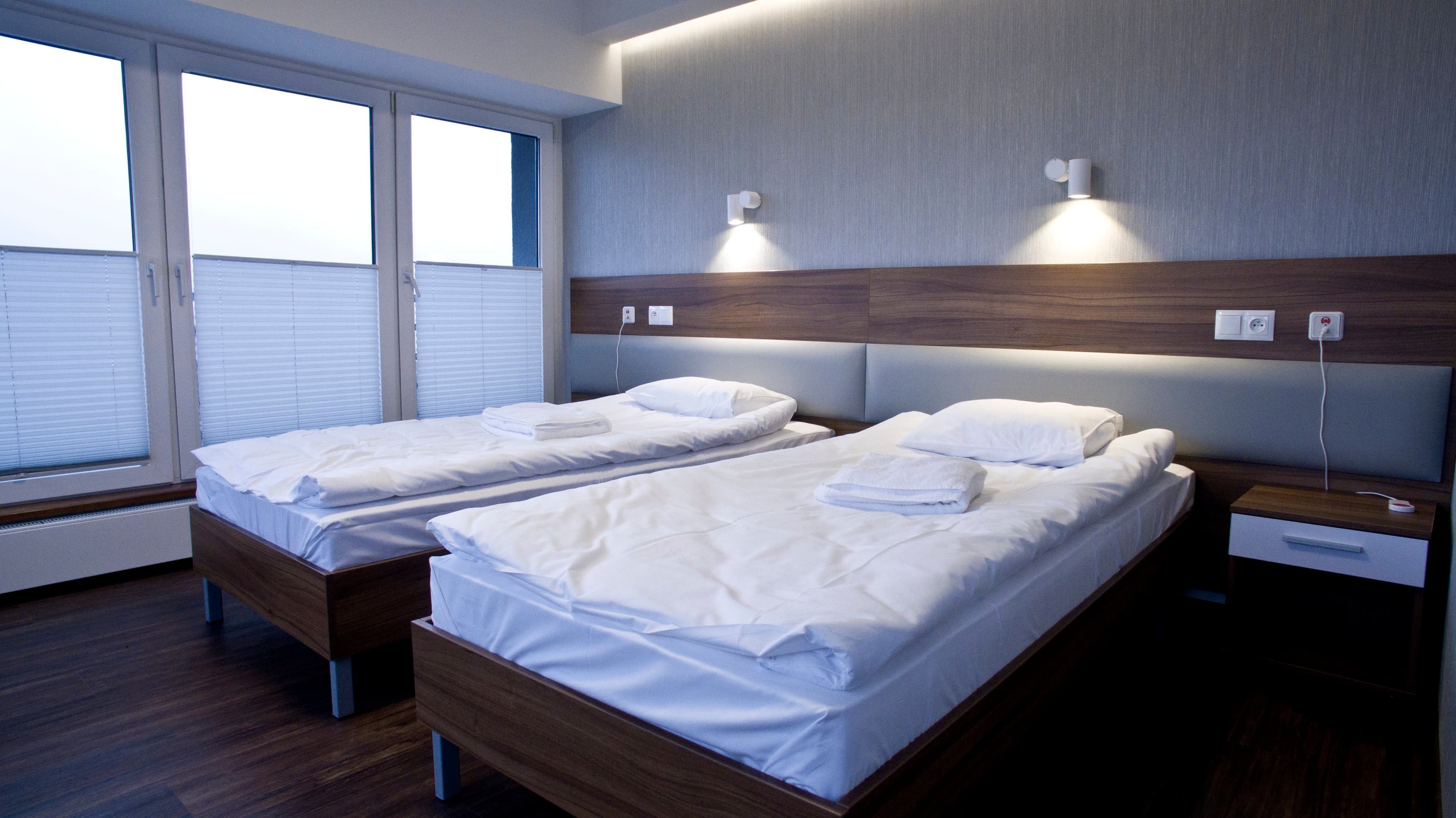
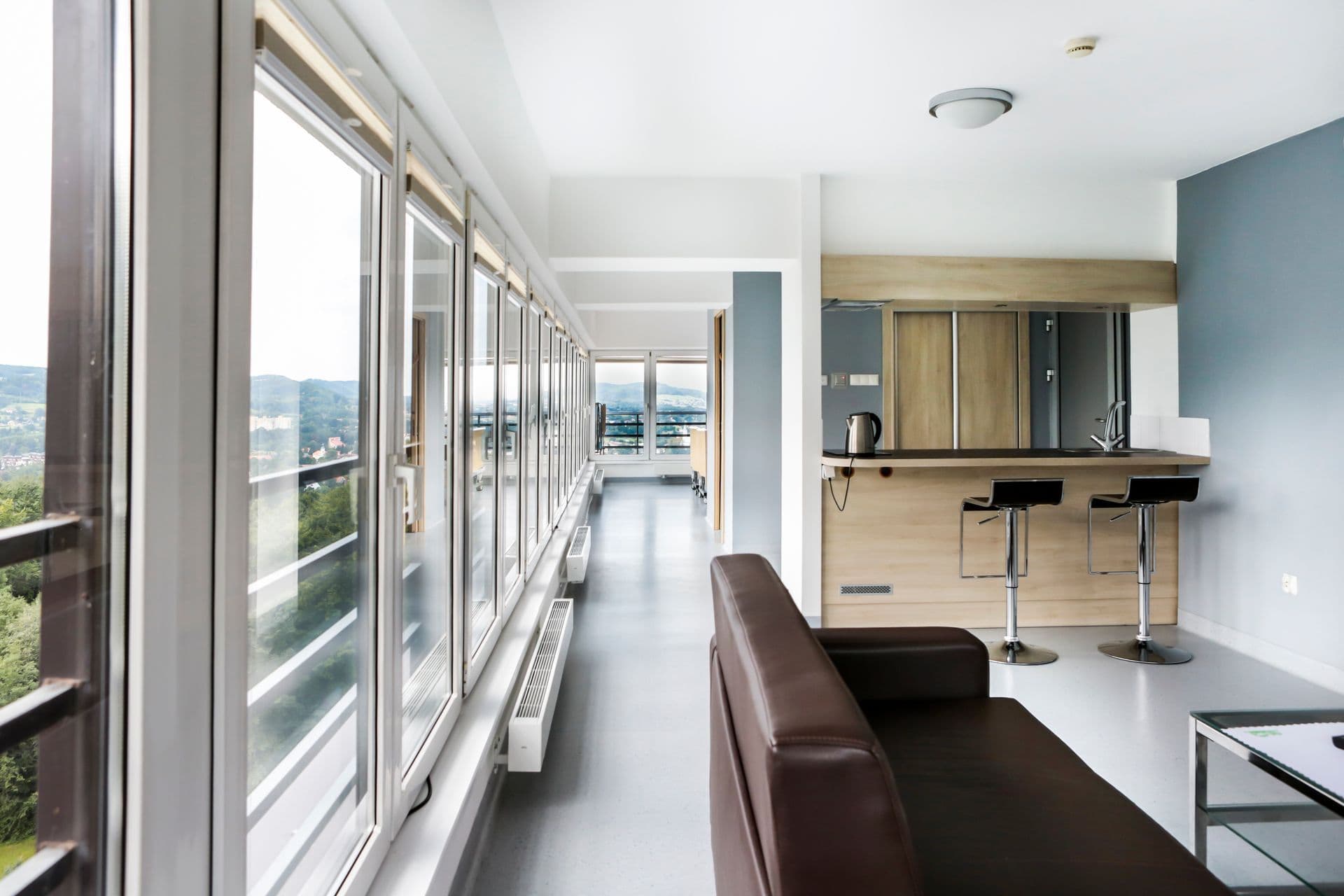
Sanatorium i Szpital Uzdrowiskowy Równica is the flagship and most monumental facility of the Ustroń health resort. It is a place with soul, in which classic spa tradition meets bold modernist architecture. Even from a distance the building's form conveys a sense of exceptionality: it resembles a mighty passenger ship or a sailing vessel gliding along the green slope of the Silesian Beskids. For a guest and their family, choosing Równica can be read as a calm, well-considered investment in health, set in a space created with treatment, rehabilitation and recovery in mind.
The history of this complex reaches back to the turn of the 1950s and 1960s, when a design for an impressive therapeutic-sanatorium complex was created in the Zawodzie district. The authors of the concept were the esteemed Silesian architects Henryk Buszko, Aleksander Franta and Tadeusz Szewczyk. Construction of Równica itself lasted from 1966 to 1988 and became part of a unique idea of geometric harmony between architecture and the natural mountain landscape. Originally twenty-eight characteristic pyramid-shaped buildings scattered across the slope were planned; ultimately seventeen such structures were built, and four separate sanatorium designs were joined into one mighty structure of Równica.
The edifice's construction rests on reinforced-concrete pillars, and the rhythm of the façade is created by alternating dark bands of windows and light lines of balconies. The building rises to eleven upper floors and has its own large canteen, thanks to which guests can eat all their meals without going outside. This is an important element of stay organisation, especially for seniors and people who value predictability of the day and closeness of basic services. Movement around the facility is supported by a lift system, easing access to most storeys.
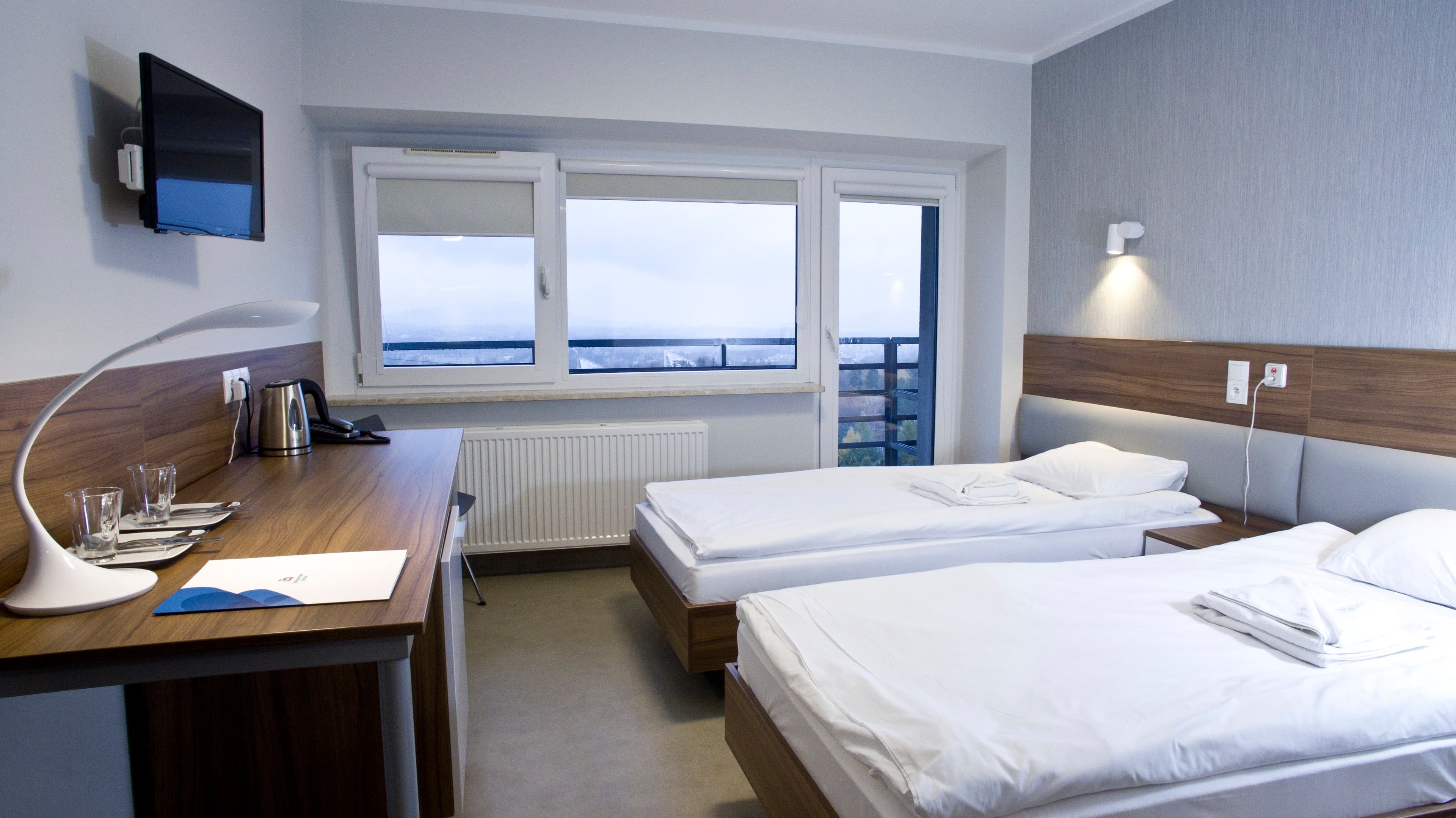
The lift system serves even and odd floors, with three lifts on each side of the building. Równica offers calm stay acoustics: the soundproofing of the rooms means noise from other floors does not intrusively reach the residential zones, which favours rest during the day and at night. Rooms from the fifth to the tenth floor have undergone comprehensive renovation in recent years, including full renewal of bathrooms and interiors, and modernisation of the remaining storeys is planned for coming years. Thanks to this, the building combines the monumental atmosphere of a traditional spa complex with modern, freshly renovated stay zones of a medical character.
Stay organisation
For privately funded stays, guests do not need a medical referral, including a referral from the Polish National Health Fund (NFZ). This does not mean, however, that rehabilitation begins randomly. A key condition for selecting treatments is an initial review of medical documentation confirming the guest's current state of health. This procedure allows any contraindications to be ruled out and strengthens the safety of the entire therapy.
For a family planning mum's or dad's stay, this is important organisational information: medical documentation should be prepared before arrival, so staff can calmly assess the body's capabilities and select treatments responsibly. This stage helps protect the senior from excessive strain and allows the stay to be treated as a well-considered investment in health, not just a change of scenery.
Check-in at Sanatorium Równica is from 12:00. The first meal for arriving guests is lunch served in the canteen, which makes it easier to plan the arrival day calmly and reduces the need to look for a meal after the journey. The stay ends at 10:00 on the departure day, after breakfast. This rhythm helps organise transport, packing, and picking up the senior without rushing.
Additional information
Designated parking spaces for cars have been prepared by Sanatorium Równica and on the grounds of the Uzdrowisko Ustroń facilities. Using the car park involves an additional fee.
Równica does not accept guests with dogs or cats for hygiene and health reasons concerning other guests. Due to the facility's medical profile and concern for a calm treatment rhythm, children are only accepted at Sanatorium Równica from the age of 16 and only accompanied by adults, both for treatment and hotel stays. Thanks to this, Równica itself maintains an atmosphere that is more orderly, calm, and conducive to the recuperation of adult guests.
It's worth highlighting the prestige of the architectural complex itself. The modernist Zawodzie complex was included in Phaidon's international atlas of 20th-century architecture as an example of modernist architecture integrated into nature. This means a stay at Równica has not only a therapeutic dimension but also a cultural one: the guest lives in a place valued for its architectural qualities.
Sanatorium Równica is located in the picturesque, forested valley of the Vistula River, on the slope of Mount Równica, in the Beskid district of Zawodzie. From the facility stretches a view of the Czantoria peak and other mountain ranges, and the surrounding spruce and beech forests give a sense of natural protection, quiet and breathing space. It's about 1.5 kilometres to the strict centre and the Rynek w Ustroniu. The mountain location on the slope provides proximity to Beskid nature and allows you to benefit both from walks around the facility and from local transport.
Directly by the building, flat walking paths and spots conducive to contemplating Beskid nature have been prepared. This is important, because not every walk has to mean descending to the centre and a later uphill return. When planning strolls, it's worth matching the route to your own pace and wellbeing. A certain reference point remains the distance of about 1.5 kilometres to the strict town centre and its retail infrastructure.
Ustroń's microclimate stands out for clean mountain air and natural inhalations, which, combined with brine aerosol from the graduation tower, create favourable conditions for regeneration of the circulatory and respiratory systems. In the immediate neighbourhood is the Park Zdrojowy with a water pump room and a publicly accessible brine graduation tower. This is a flat, easily accessible walking enclave, particularly friendly to older people. On the sanatorium grounds, guests can also use a mini brine graduation tower, allowing you to include a gentle, health-resort breathing ritual in your daily plan.
Within walking distance or a short drive awaits the Rynek w Ustroniu with the historic Kościół św. Klemensa from 1787 and Kościół ewangelicki apostoła Jakuba Starszego. For those interested in the region's history, an interesting point is the Muzeum Etnograficzne Stara Zagroda, presenting traditional wooden shepherds' cottages. Seniors who want to see the mountains without great effort can drive directly to the summit of Równica, where shelters and inns operate, or use the year-round cable car to Czantoria. An additional convenience is guided round trips by Ciuchcia Ustrońska, organised directly from outside the sanatorium.
Loading map...
Direct contact with the facility's reception
We combine specialist therapies, an individual approach and modern methods to support your return to health and daily activity.
The above treatment profiles focus on the following categories:
Showing articles 1-4 of 13
How do you choose a good sanatorium for joint problems? Compare the rehabilitation programme, care, accessibility and the full cost of a private stay.

Find out how to choose a sanatorium with a swimming pool. Compare accessibility, type of water, supervision, opening hours and costs, as well as the classes included in the package.

Planning a private stay in Lower Silesia? Compare spa towns, treatment programmes, care, room accessibility and the full cost of the offer on Vitalnia.

Learn the differences between physiotherapy, physical agent therapy and kinesiotherapy. Check treatment names in sanatorium packages and what to ask.
Article
How do you choose a good sanatorium for joint problems? Compare the rehabilitation programme, care, accessibility and the full cost of a private stay.
Article
Find out how to choose a sanatorium with a swimming pool. Compare accessibility, type of water, supervision, opening hours and costs, as well as the classes included in the package.
Article
Planning a private stay in Lower Silesia? Compare spa towns, treatment programmes, care, room accessibility and the full cost of the offer on Vitalnia.
Article
Learn the differences between physiotherapy, physical agent therapy and kinesiotherapy. Check treatment names in sanatorium packages and what to ask.

Article
Planning to go to a sanatorium together? Check the NFZ rules, a sample request, sharing a room and the terms of a private stay for two.

Article
How do you check a facility for a rehabilitation stay for a wheelchair user? See what to verify in the room, bathroom and lift, at treatments and for a carer's stay.

Article
Planning a sanatorium stay with your dog? Check the rules for private and NFZ stays, documents, fees and care for your dog during treatments.

Article
Compare sanatorium packages: treatments, eligibility assessment, care and stay conditions. See how to use Vitalnia's filters to choose a facility.

Article
Affordable private sanatorium: how to compare the full cost of a stay, dates, rooms and treatments, plus Senior Card and PFRON funding rules.

Article
Spine rehabilitation at a sanatorium: learn about treatments, warning signs, the differences between 7-, 14- and 21-day stays, and criteria for choosing a facility.

Article
What to pack for a sanatorium stay of 7, 14 or 21 days? Check the list of documents, medicines, clothes and accessories, plus a printable checklist.

Article
Chronic fatigue, joint pain, or sleep problems? Learn 5 signs worth watching for, and find out when to consult a doctor about them. 2026 guide.

Article
Find out how much a privately funded sanatorium stay costs, how long the wait for treatment funded by the Polish National Health Fund (NFZ) is, and when a privately funded stay may make sense. Full 2026 comparison.