


A good sanatorium for joint problems: how to choose a stay and compare offers
How do you choose a good sanatorium for joint problems? Compare the rehabilitation programme, care, accessibility and the full cost of a private stay.
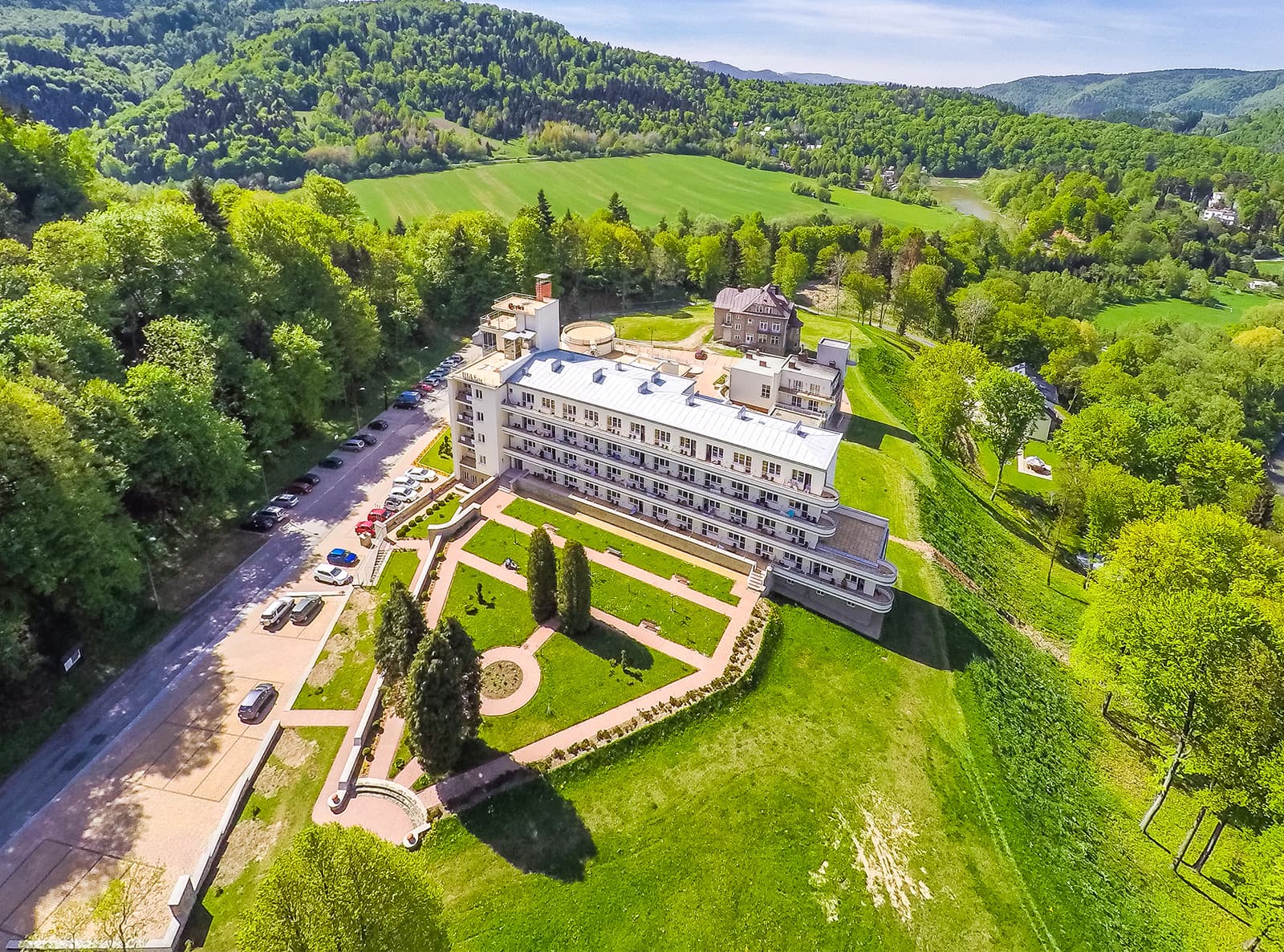
Sanatorium Wiktor Cechini Medical & SPA in Żegiestów-Zdrój is a place with soul and one of the most expressive and valuable examples of interwar modernist architecture in southern Poland. For a guest and their family it matters that choosing this facility means a conscious investment in health in a place of exceptional identity. The building was created as a material sign of the luxury and modernity of the Second Polish Republic, and its design was prepared by eminent Lwów architects: Professor Jan Bagieński and Zbigniew Wardzała. They gave it a characteristic geometric shape rooted in the functionalist movement, thanks to which the facility still impresses today with its clear, orderly form.
Construction of the sanatorium lasted from 1934 to 1936, and the investor was the Cooperative "Dom Wypoczynkowy Urzędników Naftowych Małopolska". The history of this place also holds an interesting, very human detail: the plot for construction was bid for at auction by none other than Jan Kiepura, who planned to build another luxury guesthouse here. Ultimately the land was acquired by the oil-industry cooperative, and the facility was named in honour of the cooperative's chairman, Wiktor Hłasko. The official opening took place in June 1937, and even then the building earned the title of the most modern sanatorium in the country, which to this day reinforces the sense that a guest arrives at a place built from the outset with a high standard of stay in mind.
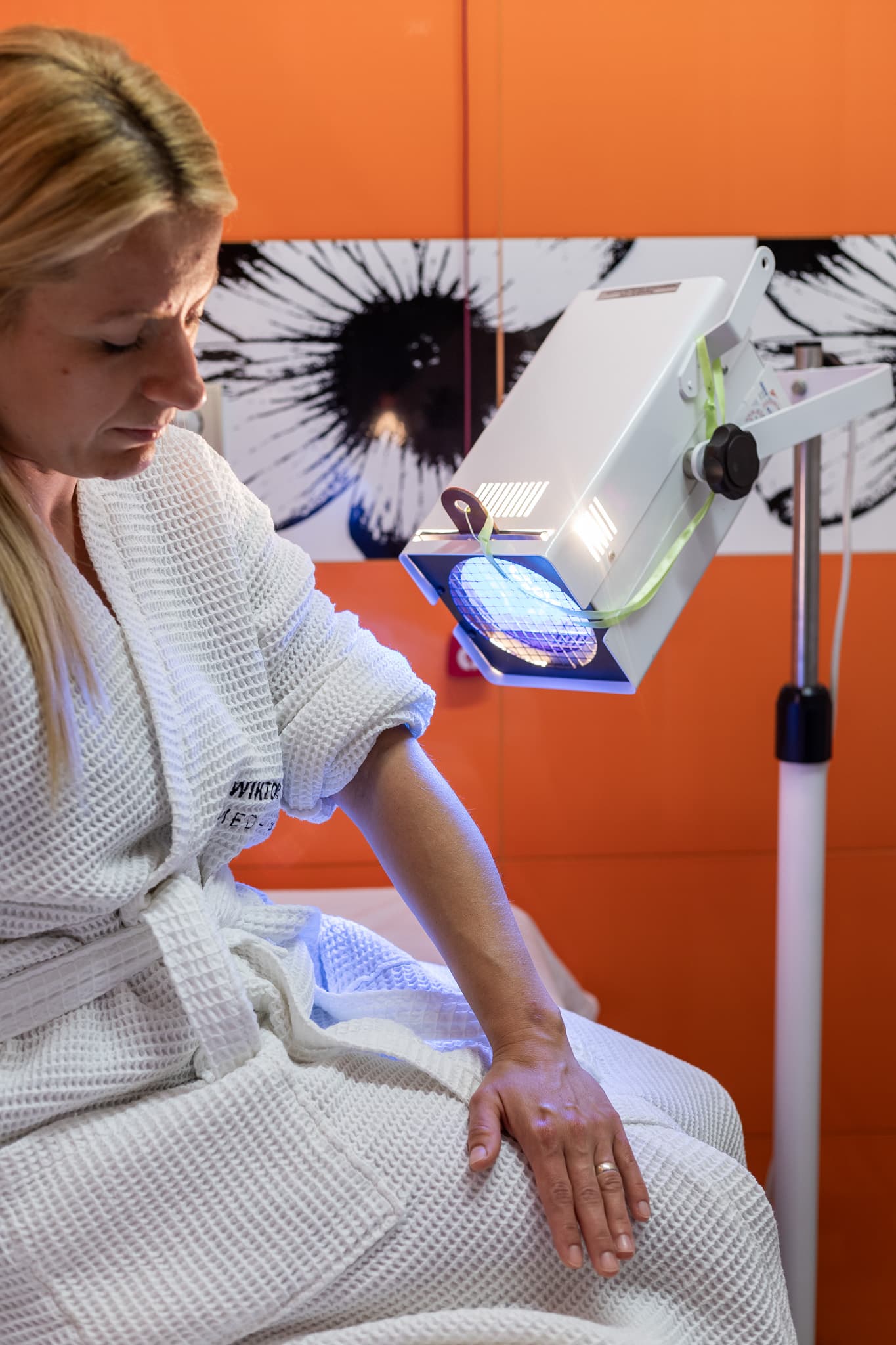
The architecture of Wiktor Cechini was subordinated to maximum use of sunlight and landscape. The white façades, numerous glazings and spacious terraces were designed with heliotherapy — treatment by sunlight — in mind, so the space itself already supports a calm rhythm of the spa day. During the Second World War the facility was not destroyed, though it served other functions: an NSDAP party school operated here, along with a leisure venue for high-ranking German officials. After the war the sanatorium returned to its spa function, went through a period of nationalisation, and then underwent thorough revitalisation after being taken over by the Cechini family. Today it combines historic chic with modern technological solutions, which for a senior means a wise combination of tradition and everyday-use safety.
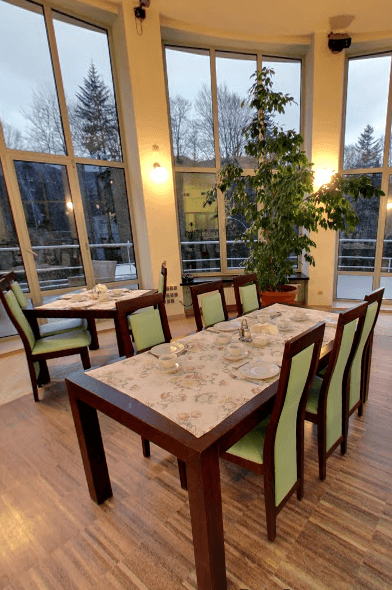
The facility is multi-storey, but communication between the levels has been resolved in a way very friendly to seniors: modern, quiet lifts operate here, reaching all residential floors as well as the level of the treatment facilities and the SPA zone. The lifts are spacious enough to easily accommodate people moving in wheelchairs or with the help of rehabilitation walkers. The interiors have an elegant, orderly character of a medical type, where clarity of form and medical sterility meet the warmth of hospitality. They are bright, tall and airy, which favours the wellbeing of mum, dad or any guest needing a breath of air from daily haste.
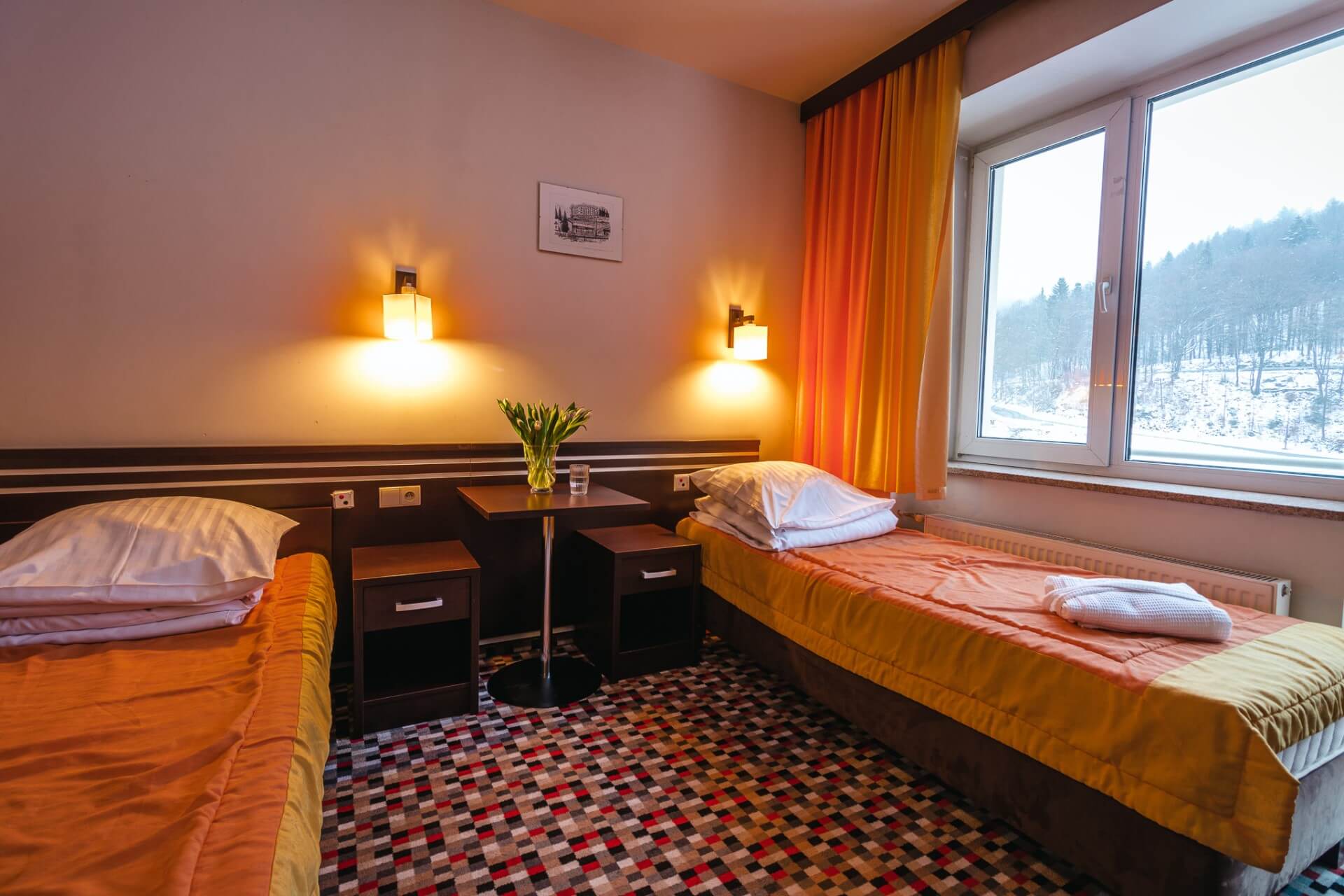
The modernisation carried out by the current owners covered not only the refreshing of the façade, but above all the replacement of installations and the adaptation of the building to strict fire-safety and sanitary standards. This is an important proof of safety, which the family can read as real care for a senior's health. The sanatorium consists of two parts: the main Wiktor building with 150 beds and the smaller Wiktor II building for 18 people, ideal for organised groups or those seeking greater intimacy. The entire infrastructure has been oriented towards minimising architectural barriers: the absence of high thresholds, wide corridors and handrails easing movement give the impression of a space designed with care.
Stay organisation
For privately funded treatment stays, a health certificate or information from a family doctor confirming no contraindications to physical agent treatments is required. This procedure serves the guest's safety and allows the resort doctor to safely plan therapy. It is worth bringing a current list of medications taken and medical documentation from recent tests, as this makes it easier to quickly and properly plan treatment from the first days of the stay.
The sanatorium provides meals in the form of three meals a day. There is the option to choose a diet adapted to specific conditions, including diabetic, easily digestible, or low-sodium, which for many seniors is one of the key conditions for a safe stay. Specialised diets, such as gluten-free or vegetarian, are subject to an additional fee. Thanks to this, the family can estimate the cost of the stay in advance and ensure nutrition matching mum's or dad's health needs.
Payments on site can be made by cash and card. It is worth remembering that check-in is usually in the afternoon and check-out is in the morning, so it is good to match the arrival plan to train or bus schedules. For guests using public transport, the facility can arrange a paid transfer from the railway station upon prior arrangement with reception, which can significantly ease the burden on the senior on travel day. A point of sale for basic hygiene items and press is also available on site, which partly compensates for the lack of a grocery store in the immediate vicinity of the resort.
Additional information
Among the additional details that genuinely affect a senior's comfort during the stay, it's worth mentioning paid guest parking.
For guests travelling with pets, important information is the possibility of staying with small pets such as dogs or cats. The service is additionally paid and mainly available in the Wiktor II building. This arrangement makes it possible to reconcile the needs of animal lovers with the comfort of people suffering from allergies or preferring a stay without animals in the main building. This is a sensibly planned division of space that increases the sense of order and mutual respect among guests.
Sanatorium Wiktor Cechini is the winner of many prestigious awards in the tourism and medical industry, providing additional confirmation of service quality. The facility also holds certificates confirming compliance with safety and hygiene standards, which is a very concrete argument for a senior and their loved ones in favour of choosing this place. An additional amenity is the option to rent recreational equipment: Nordic Walking poles are sometimes available free of charge as part of packages, and bicycles can be rented for a fee. The facility also has a rental service for children's travel cots, which can be helpful during short visits from grandchildren to grandparents staying at the spa.
Sanatorium Wiktor Cechini is located in one of the most picturesque corners of the Sądecki Beskid, in Żegiestów-Zdrój, in the part called Łopata Polska. This is a specific headland surrounded by the waters of the Poprad River, which forms the natural border with Slovakia here. For a senior and their family, this means primarily exceptional isolation from civilisational bustle and very calm conditions for regeneration. The sanatorium's immediate surroundings are flat, which is of great importance for people with mobility difficulties or those who want to walk daily without fear of steep climbs.
Around the building is a well-kept garden with numerous benches placed at even intervals. This is a small but very important sign of care for a senior, as it allows walks to be planned with frequent rest breaks. Żegiestów's microclimate stands out for great air purity and the absence of sudden pressure jumps, which is beneficial for people with arterial hypertension and heart disease. The surrounding spruce and fir forests release phytoncides with bactericidal and disinfectant action, and the scent of pine needles and forest humidity builds that particular sense that the health resort works for health also outside the treatment room.
Within walking distance of the sanatorium is a pedestrian-cycling footbridge over the Poprad, connecting Poland with Slovakia. Crossing the footbridge is gentle and safe, and the view of the river and mountains from its level is one of those experiences that stay in the memory for a long time. On the Slovak side, you can continue the walk on equally flat and well-prepared terrain in the village of Sulín, giving a senior an additional, calm recreational route without needing to undertake great effort.
For guests who want to explore the area more widely, the sanatorium forms a good base for trips to Muszyna, about 10 kilometres away, and to Krynica-Zdrój, about 20 kilometres away. In Muszyna, the sensory and biblical gardens are particularly worth attention, fully adapted for seniors' pedestrian movement. It's worth remembering that the nearest grocery shop is in Andrzejówka, about 3 kilometres from the facility, so it's good to include small shopping in the day's plan.
When planning arrival, it's worth taking the distance from the railway stop into account. The Żegiestów-Zdrój railway stop is about 1.5 kilometres from the health resort centre, while from Sanatorium Wiktor itself it's about 3 kilometres. With heavier luggage, a good solution may be to plan comfortable transport from the station to the facility in advance. This is important organisational information, good to take into account beforehand, so that the whole arrival goes calmly and without unnecessary effort.
Loading map...
Direct contact with the facility's reception
We combine specialist therapies, an individual approach and modern methods to support your return to health and daily activity.
The above treatment profiles focus on the following categories:
Showing articles 1-4 of 13
How do you choose a good sanatorium for joint problems? Compare the rehabilitation programme, care, accessibility and the full cost of a private stay.

Find out how to choose a sanatorium with a swimming pool. Compare accessibility, type of water, supervision, opening hours and costs, as well as the classes included in the package.

Planning a private stay in Lower Silesia? Compare spa towns, treatment programmes, care, room accessibility and the full cost of the offer on Vitalnia.

Learn the differences between physiotherapy, physical agent therapy and kinesiotherapy. Check treatment names in sanatorium packages and what to ask.
Article
How do you choose a good sanatorium for joint problems? Compare the rehabilitation programme, care, accessibility and the full cost of a private stay.
Article
Find out how to choose a sanatorium with a swimming pool. Compare accessibility, type of water, supervision, opening hours and costs, as well as the classes included in the package.
Article
Planning a private stay in Lower Silesia? Compare spa towns, treatment programmes, care, room accessibility and the full cost of the offer on Vitalnia.
Article
Learn the differences between physiotherapy, physical agent therapy and kinesiotherapy. Check treatment names in sanatorium packages and what to ask.

Article
Planning to go to a sanatorium together? Check the NFZ rules, a sample request, sharing a room and the terms of a private stay for two.

Article
How do you check a facility for a rehabilitation stay for a wheelchair user? See what to verify in the room, bathroom and lift, at treatments and for a carer's stay.

Article
Planning a sanatorium stay with your dog? Check the rules for private and NFZ stays, documents, fees and care for your dog during treatments.

Article
Compare sanatorium packages: treatments, eligibility assessment, care and stay conditions. See how to use Vitalnia's filters to choose a facility.

Article
Affordable private sanatorium: how to compare the full cost of a stay, dates, rooms and treatments, plus Senior Card and PFRON funding rules.

Article
Spine rehabilitation at a sanatorium: learn about treatments, warning signs, the differences between 7-, 14- and 21-day stays, and criteria for choosing a facility.

Article
What to pack for a sanatorium stay of 7, 14 or 21 days? Check the list of documents, medicines, clothes and accessories, plus a printable checklist.

Article
Chronic fatigue, joint pain, or sleep problems? Learn 5 signs worth watching for, and find out when to consult a doctor about them. 2026 guide.

Article
Find out how much a privately funded sanatorium stay costs, how long the wait for treatment funded by the Polish National Health Fund (NFZ) is, and when a privately funded stay may make sense. Full 2026 comparison.