


A good sanatorium for joint problems: how to choose a stay and compare offers
How do you choose a good sanatorium for joint problems? Compare the rehabilitation programme, care, accessibility and the full cost of a private stay.
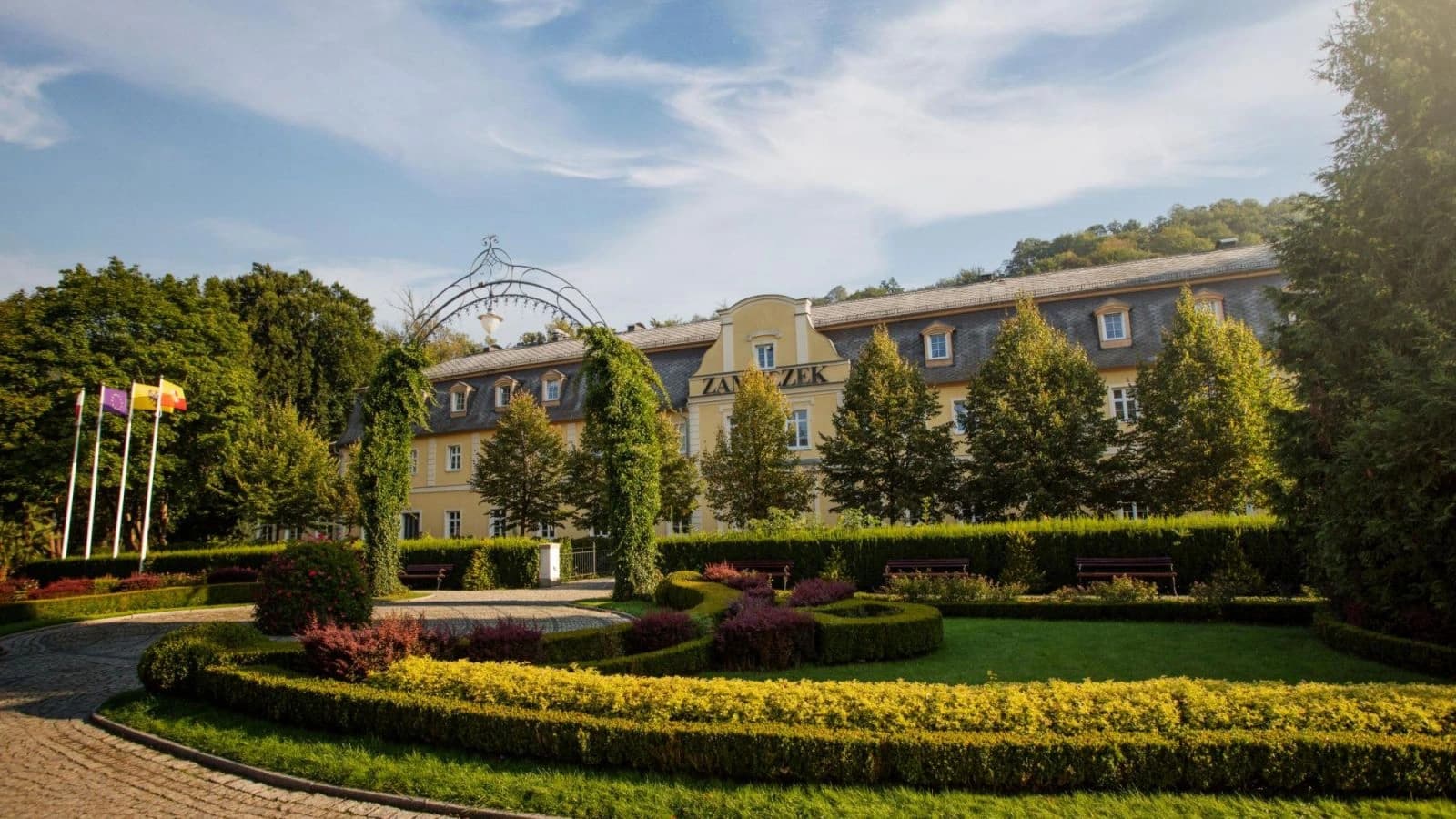
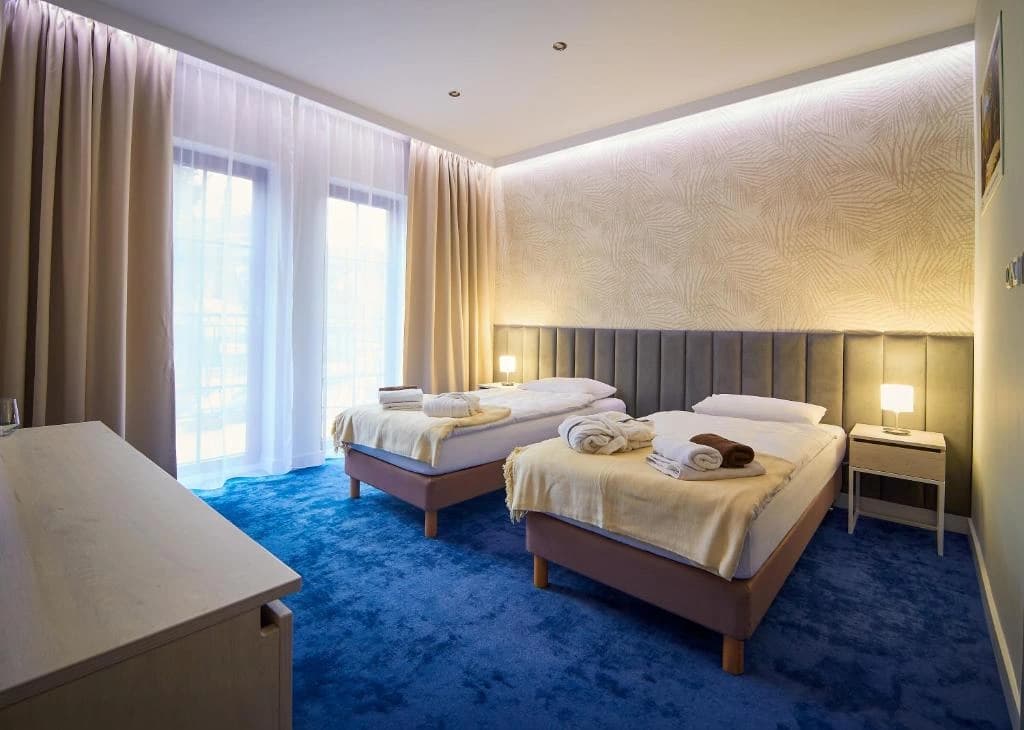
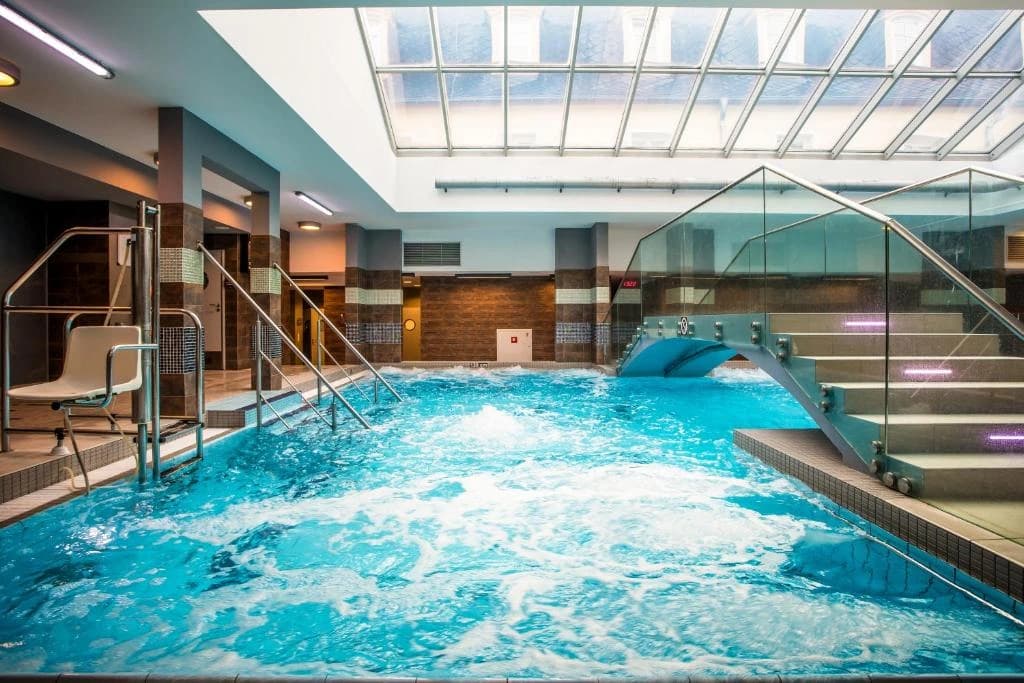
Zameczek is the oldest and most elegant architectural feature of the Kudowa spa area and an important symbol of the history of local spa medicine. Its beginnings date back to 1772, when a wooden hunting lodge was built here on the initiative of Baron Johann Joseph von Stillfried. As the therapeutic properties of the local mineral waters were discovered, the building was given a new role: in 1795 it was converted into the first guest house intended exclusively for visiting spa guests. This marked the beginning of the organised development of spa medicine in the region.
After a fire in 1806 destroyed the original structure, the building underwent a monumental reconstruction. In 1812 a luxurious, exceptionally elegant small palace in the neo-Baroque style was opened. Its prestige attracted the most eminent figures of Prussia at the time, including Queen Louise and her family and the highest-ranking military commanders. To this day, traces of this history can be found in the elegant façade, the tall decorated windows and the palatial character of the interiors, which give a stay the atmosphere of the classic spa tradition, a place with a soul and a former elite resort.
The building has been renovated many times: in 2008 a key revitalisation of the façades restored their former regal splendour, and in 2018 a thorough modernisation of the interiors covered the accommodation and therapy facilities. The building has been equipped with solutions that make it easier for people with disabilities to use. Modern passenger lifts reach all residential floors and the treatment areas, so older guests with advanced cardiorespiratory insufficiency or serious musculoskeletal conditions do not have to climb stairs.
Stay organisation
Every privately funded health stay with a treatment package begins with a thorough medical interview with the sanatorium doctor, who assesses the older guest's current health on site and decides on eligibility for specific therapeutic treatments. It is worth bringing copies of existing medical records and the results of basic blood tests, as they help plan therapy precisely, but they are not a strict condition of admission.
The room is available from 15:00 on the day of arrival, which gives staff time to prepare and clean it calmly after the previous guests. Check-out is by 11:00 on the day of departure, leaving time to pack and get ready to leave the facility.
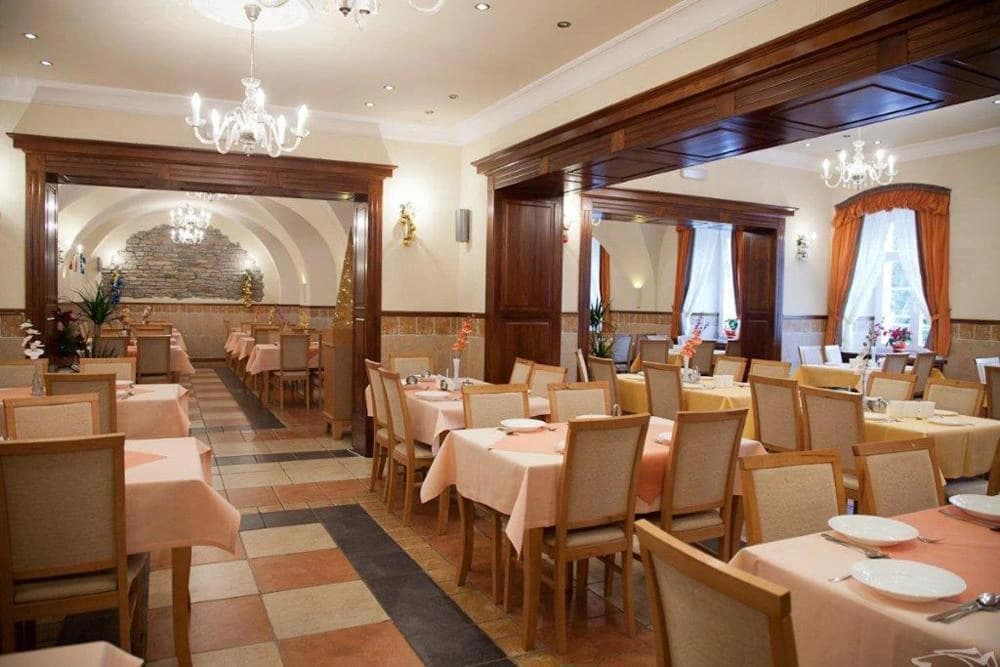
Meals are served in an elegant, spacious dining room on site. The way meals are served, their number, the availability of a buffet and the possibility of ordering special diets depend on the stay and the current catering arrangements. On treatment stays, the diet can be adapted to medical indications after prior agreement with the facility. Selected packages include bottled mineral water delivered to the room. Guests who take medicines at set times should check the meal schedule before arrival and, if necessary, discuss their meals with the staff.
Additional information
If you are coming by car, it is worth planning ahead. The location in the heart of the historic Spa Park means limited room to manoeuvre and a small number of parking spaces. Parking at the facility is charged, and availability depends on current occupancy.
Zameczek does not accept pets.
Zameczek belongs to Uzdrowiska Kłodzkie and Polska Grupa Uzdrowisk, which apply shared quality procedures for medical, rehabilitation and hotel services. The managing company has implemented a quality management system compliant with the ISO 9001 standard and has received awards for its contribution to the development of health tourism in Lower Silesia. The group also produces and bottles its own mineral waters.
Zameczek's location is one of the greatest advantages of a stay, especially in terms of safe mobility for older guests. The building stands in the very heart of the historic Spa Park in Kudowa-Zdrój, right at the foot of Park Hill (Góra Parkowa). The park, laid out in the mid-17th century on the model of classic English parks, covers 17 hectares. The sanatorium's immediate surroundings and the main axes of the park are completely flat, which is particularly important for older people with heart problems, breathlessness or advanced degenerative changes in the knee and hip joints. Here they can take longer, restorative walks without exhausting climbs or stairs.
The paths have a hard, even surface that makes it easier to move around with a walking frame or in a wheelchair. Contoured benches have been placed close together along the routes, so a place for a short rest is always nearby. Gentle slopes only appear after leaving the strict centre of the spa, in the direction of the trails leading up Park Hill.
Kudowa-Zdrój lies at an altitude of about 390–400 m above sea level, in a natural basin surrounded by the hills of the Table Mountains and the Orlické foothills. The mild foothill climate, the park greenery and the extensive forests encourage rest in the fresh air, regular walks and calm recovery between treatments. The surroundings naturally complement the prescribed treatments with moderate activity adapted to the guest's abilities.
The nearest bus stop is about 300–600 m from the building. On flat terrain, this distance can also be covered with a wheeled suitcase. Within a few minutes you can walk to the spa's main promenade, with well-stocked grocery shops, cafés, patisseries with desserts and intimate restaurants. Everyday needs and a calm trip out for coffee therefore do not require a long journey or planning a complicated route.
A few dozen metres from the sanatorium is the Mineral Water Pump Room, the largest building of its kind in Lower Silesia and considered the most beautiful. In its semicircular interior you can taste the local acidulous waters and see the historic frescoes by Arpad Molnar, depicting life in the region at the beginning of the 20th century. Next to it stand the historic covered Promenade Hall and the monumental Polonia sanatorium, which houses the Spa Theatre, the local centre of culture and art. The western edge of the park is marked by a revitalised pond, where in the warmer months you can go out in a rented boat. For lovers of history and craftsmanship, the Museum of Minerals with its collection of precious stones from around the world and the Toy Museum are close by. A slightly longer walk, but still manageable on foot, leads to the Chapel of Skulls in the Czermna district, whose walls and crypt are lined with thousands of human bones.
Loading map...
Direct contact with the facility's reception
We combine specialist therapies, an individual approach and modern methods to support your return to health and daily activity.
The above treatment profiles focus on the following categories:
Showing articles 1-4 of 13
How do you choose a good sanatorium for joint problems? Compare the rehabilitation programme, care, accessibility and the full cost of a private stay.

Find out how to choose a sanatorium with a swimming pool. Compare accessibility, type of water, supervision, opening hours and costs, as well as the classes included in the package.

Planning a private stay in Lower Silesia? Compare spa towns, treatment programmes, care, room accessibility and the full cost of the offer on Vitalnia.

Learn the differences between physiotherapy, physical agent therapy and kinesiotherapy. Check treatment names in sanatorium packages and what to ask.
Article
How do you choose a good sanatorium for joint problems? Compare the rehabilitation programme, care, accessibility and the full cost of a private stay.
Article
Find out how to choose a sanatorium with a swimming pool. Compare accessibility, type of water, supervision, opening hours and costs, as well as the classes included in the package.
Article
Planning a private stay in Lower Silesia? Compare spa towns, treatment programmes, care, room accessibility and the full cost of the offer on Vitalnia.
Article
Learn the differences between physiotherapy, physical agent therapy and kinesiotherapy. Check treatment names in sanatorium packages and what to ask.

Article
Planning to go to a sanatorium together? Check the NFZ rules, a sample request, sharing a room and the terms of a private stay for two.

Article
How do you check a facility for a rehabilitation stay for a wheelchair user? See what to verify in the room, bathroom and lift, at treatments and for a carer's stay.

Article
Planning a sanatorium stay with your dog? Check the rules for private and NFZ stays, documents, fees and care for your dog during treatments.

Article
Compare sanatorium packages: treatments, eligibility assessment, care and stay conditions. See how to use Vitalnia's filters to choose a facility.

Article
Affordable private sanatorium: how to compare the full cost of a stay, dates, rooms and treatments, plus Senior Card and PFRON funding rules.

Article
Spine rehabilitation at a sanatorium: learn about treatments, warning signs, the differences between 7-, 14- and 21-day stays, and criteria for choosing a facility.

Article
What to pack for a sanatorium stay of 7, 14 or 21 days? Check the list of documents, medicines, clothes and accessories, plus a printable checklist.

Article
Chronic fatigue, joint pain, or sleep problems? Learn 5 signs worth watching for, and find out when to consult a doctor about them. 2026 guide.

Article
Find out how much a privately funded sanatorium stay costs, how long the wait for treatment funded by the Polish National Health Fund (NFZ) is, and when a privately funded stay may make sense. Full 2026 comparison.