


A good sanatorium for joint problems: how to choose a stay and compare offers
How do you choose a good sanatorium for joint problems? Compare the rehabilitation programme, care, accessibility and the full cost of a private stay.
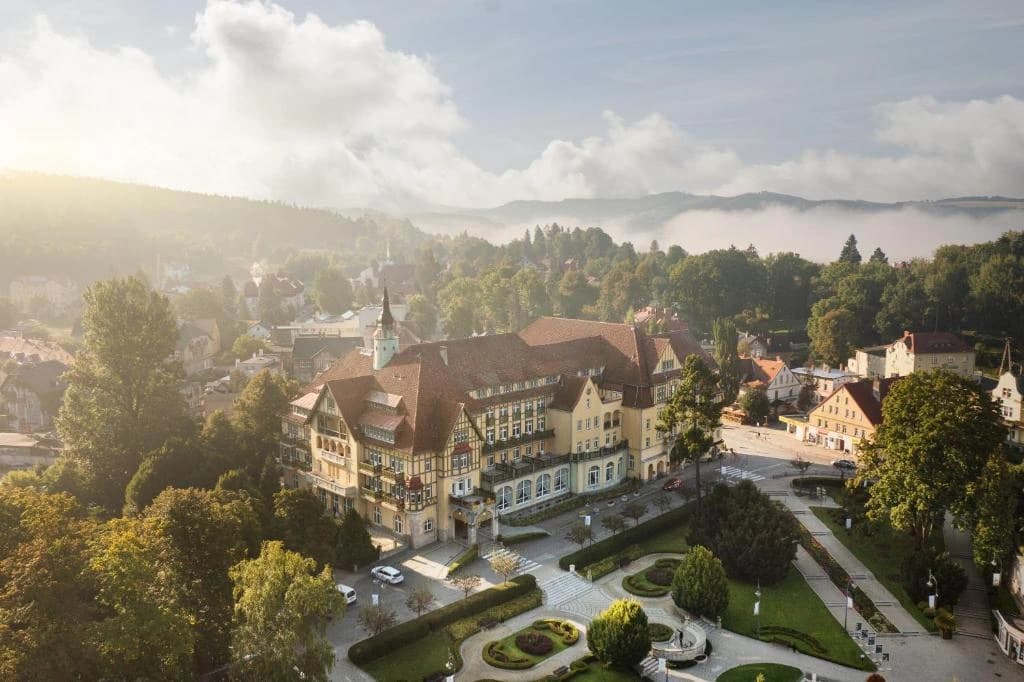
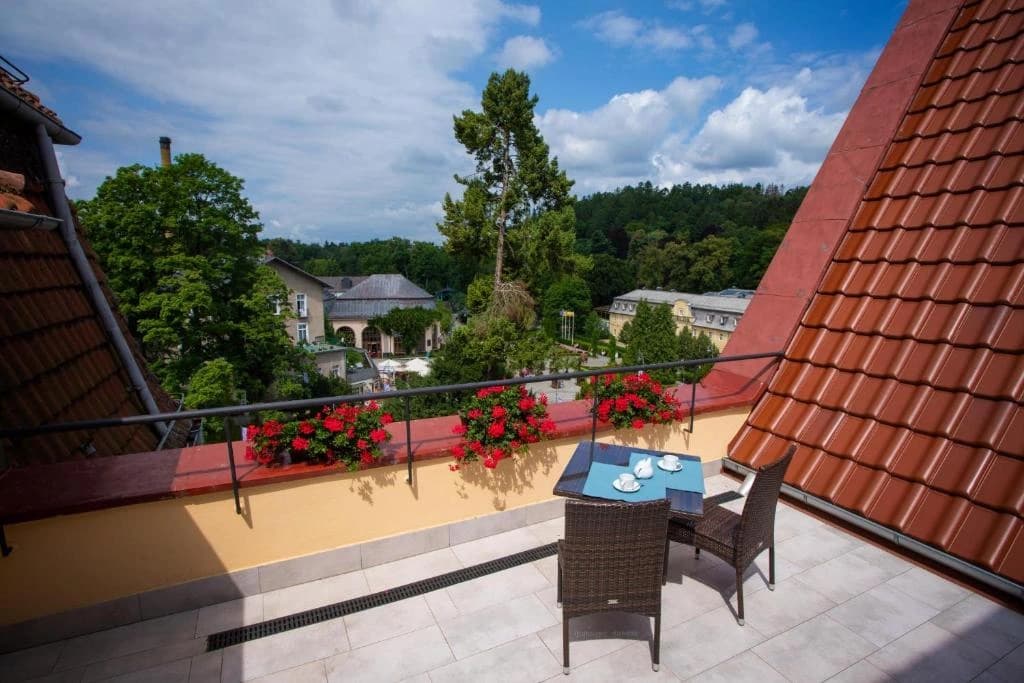
Szpital Uzdrowiskowy Polonia (Polonia Spa Hospital) is the epitome of the Kudowa-Zdrój landscape, the resort's most impressive building and for over a century part of the town's history. The beginnings of the spa itself date back to 1354, when the town was recorded under the name Lipolitov, and the first wooden bathing facilities were built here as early as the first half of the 17th century. In the mid-19th century Kudowa gained a reputation as the first cardiology spa in what was then Germany, attracting the aristocracy and European elites. In response to the growing demand for luxurious accommodation, the present building was erected in 1905–1906, just after the railway line arrived, as the exclusive Fürstenhof spa hotel, meaning the Prince's Court.
The building was designed in the regional Heimatstil spa style, typical of old resorts and harmoniously integrated into the mountain surroundings and microclimate at the foot of the Table Mountains. In its first decades it offered 125 elegant rooms and an impressive theatre and performance hall, and in 1921 Winston Churchill took a cure within its walls. During the Second World War the former luxury hotel served as a hospital for Wehrmacht soldiers. After 1945, following a brief border dispute with Czechoslovakia and the final incorporation of Kudowa-Zdrój into Poland, the building was named Szpital Uzdrowiskowy Polonia and began a new chapter serving Polish spa guests. The atmosphere of the building inspired Jan Koplowitz to write the novel “Bohemia mój los”, on which the well-known 1983 TV series “Hotel Polanów i jego goście” was based, starring, among others, Kalina Jędrusik.
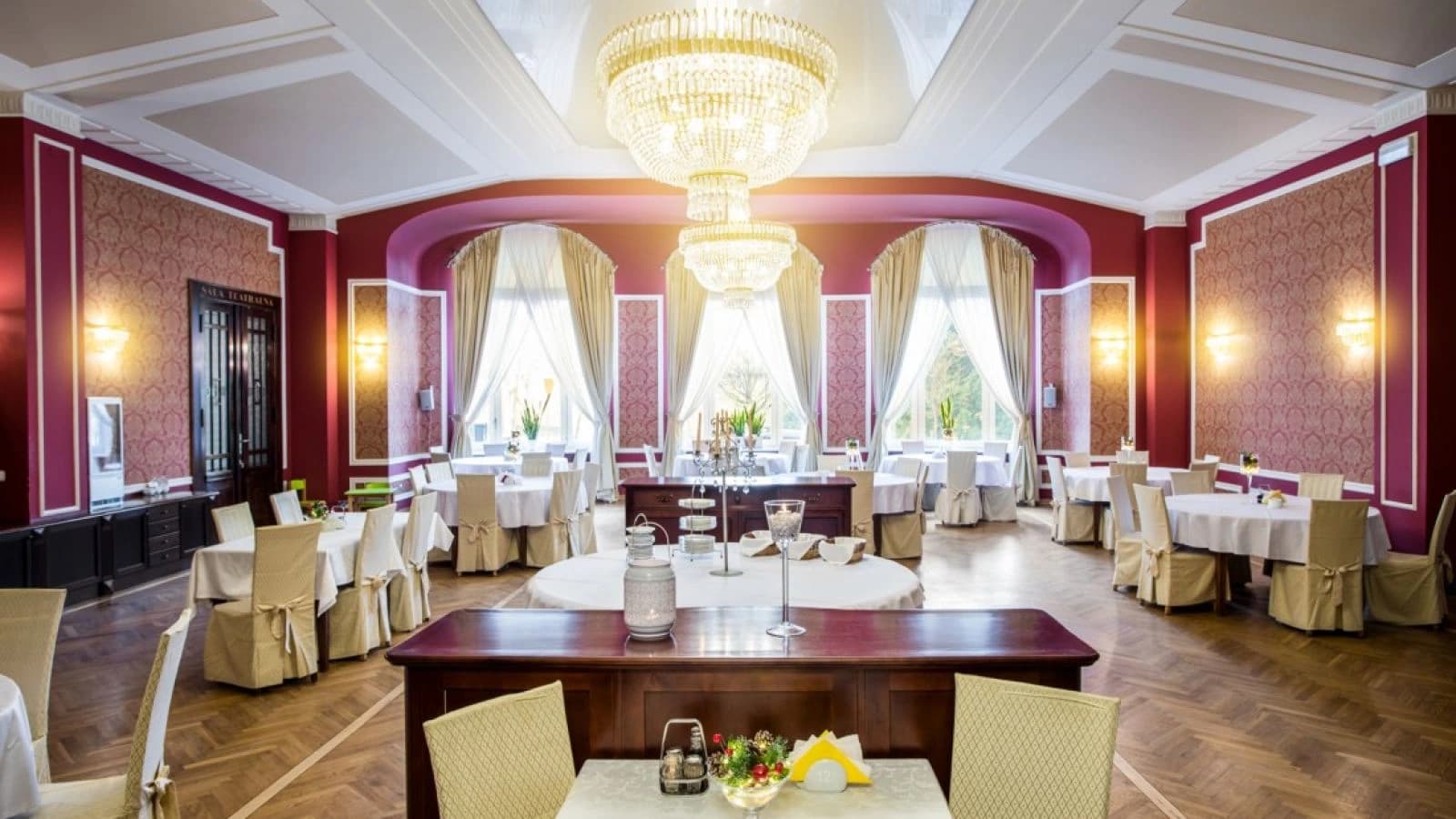
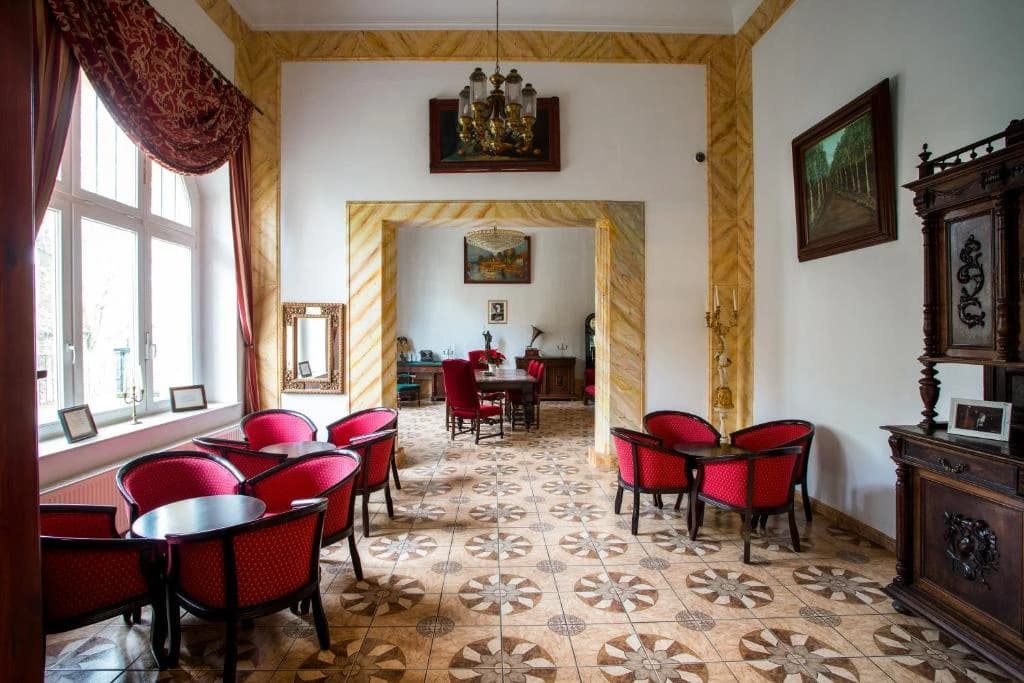
Today's Polonia combines the classic spa tradition with modernity, a high standard of service and elements of a medical spa. The monumental, symmetrical building is clearly visible from the Spa Park, and the carefully preserved details of the façade recall the prestigious character of the former Prince's Court. Inside, guests will find elegant dining rooms with a historic touch and spacious, bright halls where they can walk calmly even without going outside. The cultural heart of the building and of the whole town is the Stanisław Moniuszko Spa Theatre, which regularly hosts plays and symphony concerts.
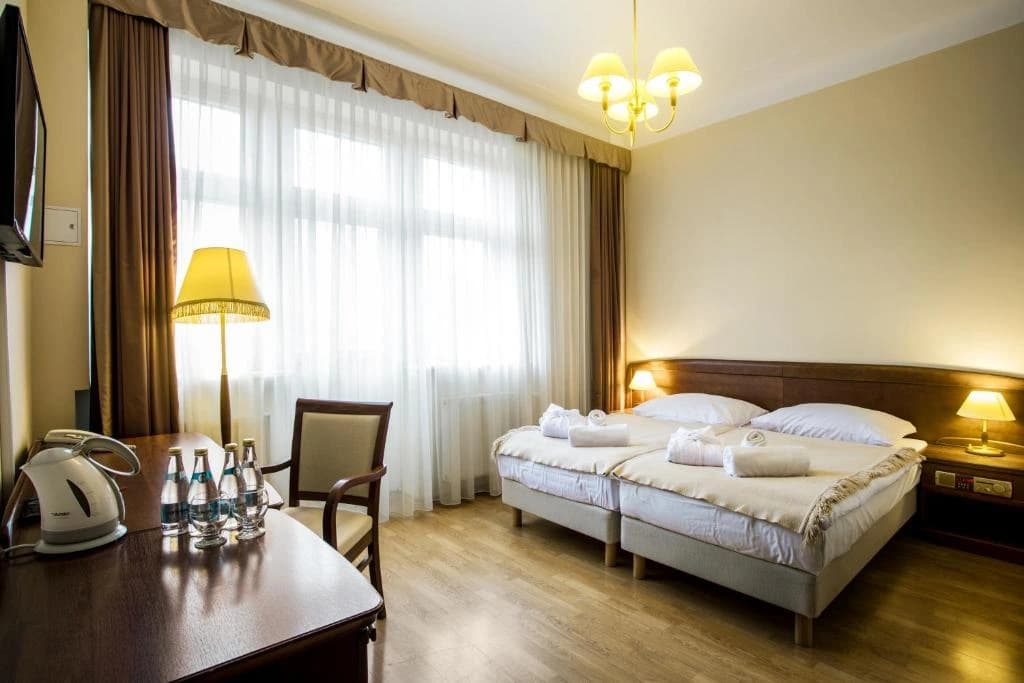
In everyday logistics, the building's full adaptation to the needs of people with mobility impairments is particularly important. Spacious passenger lifts connect all floors and allow easy access with a wheelchair or a walking frame, so there is no need to climb stairs to the upper floors. The central reception is open daily from 7:00 to 21:00, giving guests and their loved ones constant access to help and information. Such solutions provide a sense of order and security from the moment you enter the building.
Stay organisation
At Szpital Uzdrowiskowy Polonia, check-in is from 15:00 on the first day of the stay and check-out is by 11:00 on the day of departure. Registration, opening a guest record and room allocation take place on arrival at the central reception on the ground floor.
The required documents depend on the type of stay. Guests coming for treatment funded by the Polish National Health Fund (NFZ) should bring an identity document, current medical records and a supply of regularly taken medicines sufficient for the entire stay, and must also have an e-referral. For a privately funded stay, a valid identity document is enough to check in, and a referral from a family doctor is not required. In a treatment package, the selection of treatments and the medical eligibility assessment take place on site during a consultation with the spa doctor.
Meals are organised around the rhythm of the stay and the treatment schedule. Depending on the package, guests may receive 3 meals a day, and breakfasts and suppers are sometimes served as a buffet, so guests can put together their own portion according to appetite and dietary recommendations. Lunches are usually served at the table in the dining room.
Guests with prescribed crenotherapy use the local sources in the historic Mineral Water Pump Room in the Spa Park, in line with their treatment card and staff guidance. The semicircular interior of the pump room is decorated with historic frescoes and exotic plants, so the daily drinking cure can also be a calm walking ritual. The individual waters differ in composition and taste, so their choice and use should be matched to the guest's health. Near the promenade there is also an outdoor mineral water source, a characteristic feature of the spa landscape of Kudowa-Zdrój.
Additional information
Because of the historic character of the strict centre, the number of parking spaces at Polonia is limited. Guests arriving by car can use monitored but unattended parking spaces next to the Polonia and Zameczek buildings. Parking is charged, and spaces are allocated subject to availability.
Polonia stands in the very heart of Kudowa-Zdrój, at the foot of the gently sloping Park Hill (Góra Parkowa) and directly above the 17-hectare Spa Park. The park was laid out on the model of classic English parks as early as the 18th century, and its heyday came in the interwar period. What matters most for older guests, however, is everyday convenience: the main part of the park is flat, without slopes or stairs, and the wide, paved and well-kept paths allow safe, long and untiring walks, including for people using crutches, a walking frame or a wheelchair. In the pleasantly cool shade of mighty, centuries-old exotic trees and among magnificent rhododendrons that flower in spring, dozens of comfortable benches have been placed where you can rest, look at the flower beds and listen to the sound of the fountains, which are lit up in the evening. At the same time, it is worth remembering that outside the main park and promenade Kudowa is distinctly hilly, and the roads leading towards the residential areas climb uphill.
Everyday essentials are close to the building. The nearest well-stocked grocery shop, where you can buy newspapers, fruit and small items, is about 120 m from the main entrance, so you do not have to carry shopping a long way. Local and municipal public transport stops are just beyond the edge of the park, the railway station is about 2 km away, and a paved route of about 4 km leads to the border crossing with the Czech Republic, a popular destination for afternoon walks. The most important and most symbolic point of daily walks is the monumental Mineral Water Pump Room, just 150 m from Polonia's doors on the main avenue, built on a semicircular plan and architecturally connected to the concert hall. Its interior is decorated with frescoes by the Hungarian painter Arpad Molnar depicting Lower Silesia at the beginning of the 20th century, and among exotic plants you can taste waters from deep local springs and rest in the armchairs provided.
Kudowa-Zdrój is known for its mild foothill microclimate and long tradition of treating cardiovascular diseases. The surrounding spruce and beech forests, the extensive park and the town's sheltered location encourage rest and moderate activity in the fresh air. Deep in the park there is a modern brine graduation tower: a roofed structure filled with blackthorn twigs over which brine trickles, creating a fine aerosol around it. Benches by the tower let you stop during a walk and breathe calmly in the spa surroundings, so the area is popular with people seeking calm and contact with the park. Access to this area depends on the weather and the current organisation of the park.
Within walking distance there are also attractions of varying difficulty. The Chapel of Skulls in the Czermna district, unique in Europe and chosen by those interested in history and reflection on transience, is roughly a 30-minute walk from the building, although the route includes gentle slopes. Built in the 18th century by Father Tomaszek, the chapel has walls and a ceiling lined with thousands of carefully bleached human bones and skulls, creating a moving memento mori. Much closer, on ul. Zdrojowa, are the Toy Museum, which lets you return to childhood memories, and the Museum of Minerals and Stones with colourful, shimmering specimens extracted from deep inside the earth. For fitter and more active older guests, Kudowa can be a base for trips to the rock labyrinths of the Table Mountains, such as Błędne Skały and Szczeliniec Wielki, but getting there requires road transport, and visiting them requires good fitness to climb steps cut into the rock.
Loading map...
Direct contact with the facility's reception
We combine specialist therapies, an individual approach and modern methods to support your return to health and daily activity.
The above treatment profiles focus on the following categories:
Showing articles 1-4 of 13
How do you choose a good sanatorium for joint problems? Compare the rehabilitation programme, care, accessibility and the full cost of a private stay.

Find out how to choose a sanatorium with a swimming pool. Compare accessibility, type of water, supervision, opening hours and costs, as well as the classes included in the package.

Planning a private stay in Lower Silesia? Compare spa towns, treatment programmes, care, room accessibility and the full cost of the offer on Vitalnia.

Learn the differences between physiotherapy, physical agent therapy and kinesiotherapy. Check treatment names in sanatorium packages and what to ask.
Article
How do you choose a good sanatorium for joint problems? Compare the rehabilitation programme, care, accessibility and the full cost of a private stay.
Article
Find out how to choose a sanatorium with a swimming pool. Compare accessibility, type of water, supervision, opening hours and costs, as well as the classes included in the package.
Article
Planning a private stay in Lower Silesia? Compare spa towns, treatment programmes, care, room accessibility and the full cost of the offer on Vitalnia.
Article
Learn the differences between physiotherapy, physical agent therapy and kinesiotherapy. Check treatment names in sanatorium packages and what to ask.

Article
Planning to go to a sanatorium together? Check the NFZ rules, a sample request, sharing a room and the terms of a private stay for two.

Article
How do you check a facility for a rehabilitation stay for a wheelchair user? See what to verify in the room, bathroom and lift, at treatments and for a carer's stay.

Article
Planning a sanatorium stay with your dog? Check the rules for private and NFZ stays, documents, fees and care for your dog during treatments.

Article
Compare sanatorium packages: treatments, eligibility assessment, care and stay conditions. See how to use Vitalnia's filters to choose a facility.

Article
Affordable private sanatorium: how to compare the full cost of a stay, dates, rooms and treatments, plus Senior Card and PFRON funding rules.

Article
Spine rehabilitation at a sanatorium: learn about treatments, warning signs, the differences between 7-, 14- and 21-day stays, and criteria for choosing a facility.

Article
What to pack for a sanatorium stay of 7, 14 or 21 days? Check the list of documents, medicines, clothes and accessories, plus a printable checklist.

Article
Chronic fatigue, joint pain, or sleep problems? Learn 5 signs worth watching for, and find out when to consult a doctor about them. 2026 guide.

Article
Find out how much a privately funded sanatorium stay costs, how long the wait for treatment funded by the Polish National Health Fund (NFZ) is, and when a privately funded stay may make sense. Full 2026 comparison.